Apparel and Textiles Warehouse Management System (WMS): From Fabric Rolls to Finished Goods

Learn moreright arrow

How PLM Software Helps Fashion Brands Reduce Time-to-Market (2026 Guide)

8 mins read • 20th, May 2026

Quick Answer

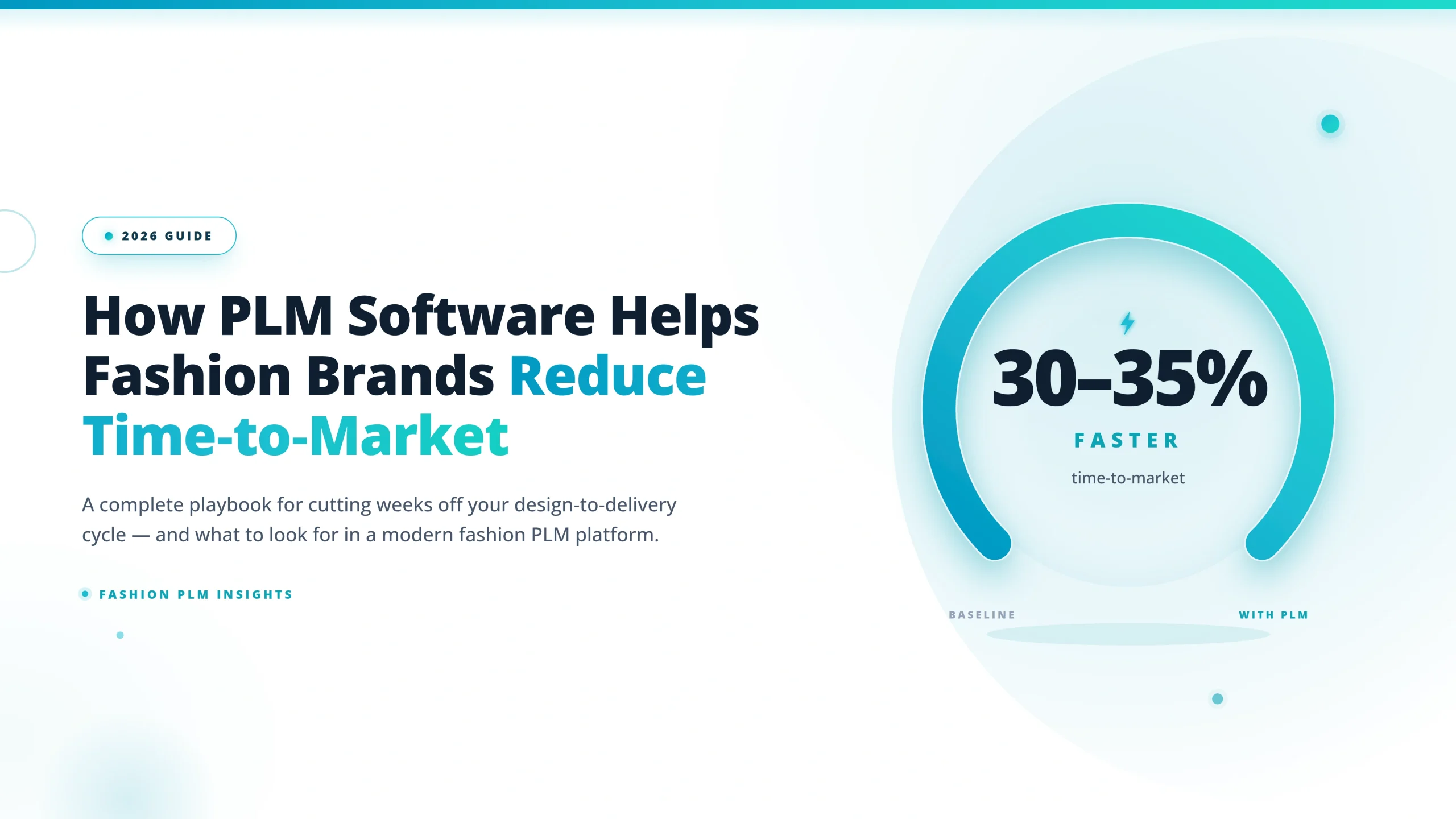
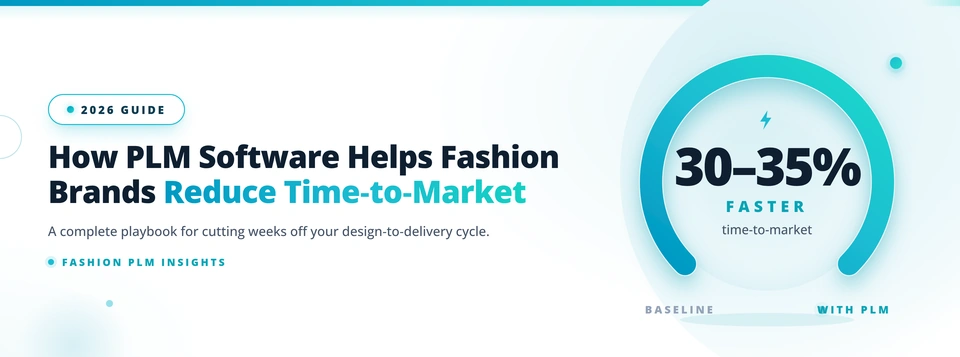
Fashion PLM software helps brands launch products faster. It gathers product data in one place, turns tech packs digital, speeds up sample approvals, tracks timelines , and makes supplier communication easier. Apparel brands implementing PLM platforms typically see a 30–35% reduction in time-to-market — Benetton India cut TTM by 35% and Noppies reduced lead times by 30% using WFX PLM. 

Key Points to Know:

  • The time it takes to bring fashion products to market has shrunk from 12–18 months to just 2–4 weeks in fast-fashion industries.  
  • Relying on scattered product details in emails and spreadsheets creates the biggest hidden cost during apparel development. 
  • PLM software serves as the main platform where designers, merchandisers, suppliers, and buyers keep everything organized. 
  • Fashion Brand that use PLM launch products 20–40% quicker while also cutting down on sampling costs.  
  • The largest improvements in time-to-market come from using digital tech packs automated approvals and working with suppliers in real-time. 

What is Time-to-Market in the Fashion Industry?

Time-to-market (TTM) represents the complete duration from original product idea to store availability. In clothing, this encompasses design, technical package development, material procurement, prototype creation, authorization, mass manufacturing, inspection, transportation, and delivery. 

Conventional fashion companies work with 6–12 month timelines. Fast-fashion competitors like Zara, Shein, and Boohoo have reduced this to 2–4 weeks. Based on McKinsey’s annual State of Fashion report, rapid market entry has emerged as one of the top three competitive advantages in fashion — along with environmental responsibility and online platforms. 

What is Fashion PLM Software?

Fashion PLM software is a unified digital system that oversees all phases of clothing product creation — from concept sketches and technical package development through material selection, pricing, prototype creation, authorization, and manufacturing transfer. Unlike standard PLM systems built for vehicles or technology products, fashion-specific PLM solutions accommodate industry-unique processes including color variations, sizing grids, material lists (BOM), accessories, and seasonal line development. 

Why Does Time-to-Market Matter for Fashion Brands?

Fashion is a trend-driven, consumer-led industry. A delayed launch can mean missing an entire season — and an entire revenue window. As Business of Fashion has consistently reported, consumer attention spans on micro-trends have shrunk from months to weeks, driven by TikTok and Instagram cycles. Brands that cannot move quickly forfeit market share to faster competitors and end up with markdown-heavy inventory. 

The business impact of slow TTM: 

  • Lost first-mover advantage on trending styles 
  • Higher markdown rates and dead inventory 
  • Reduced full-price sell-through 
  • Weakened buyer relationships with retailers and marketplaces 
  • Compressed margins from rush-order air freight 

Confused about PLMs? Get Our Buyer’s Guide

    5 Ways PLM Software Reduces Time-to-Market for Fashion Brands

    1. Centralizes All Product Data for Instant Access

    Teams lose hours hunting for updated product files when data sits scattered across emails, hard drives, or random documents. PLM software changes that. It gathers all the information in one spot making it easy to access for the right people whenever they need it.  

    PLM also makes it easier for teams to securely share information with other departments or external stakeholders such as suppliers, agents, or buyers. Built-in capabilities like version control, search and filter, user permissions, and audit trails enable teams to manage data far more efficiently than email-based workflows. 

    Customer proof: Dutch fashion brand Mexx selected WFX PLM because of its PIM and DAM modules. This allowed them to bring together all product data in a single platform and pull it out to use on specific channels like Zalando and Amazon. 

    2. Standardizes and Digitizes Tech Packs

    fashion tech pack contains every specification a factory needs — fabric yarns, construction methods, trims, measurements, wash instructions, and labelling. When tech packs live in Excel or PDFs, version mismatches cause costly errors and rework. 

    PLM solutions standardize tech pack development through reusable templates for different product categories, each customizable for specific construction and supplier requirements. Digital tech packs ensure suppliers always have the most up-to-date specifications, CAD files, and reference images — accessible with one click. 

    Read more: How digital tech packs can prevent costly manufacturing errors

    3. Speeds Up Sample Approvals and Quality Control

    Sampling is the single biggest bottleneck in apparel development. Each round of fit, proto, and PP samples adds 2–4 weeks to the calendar. PLM accelerates approvals by ensuring everyone — designer, merchandiser, supplier, QA — works from the same design version, eliminating discrepancies in measurements, colors, and materials. 

    PLM also enforces stage-gated approval routing, so the right stakeholders sign off at each milestone. Effective collaboration between design and merchandising prevents confusion around materials and adherence to original design intent — reducing the average number of sample rounds from 4–5 to 2–3.

    4. Enforces Timelines and Critical Path Adherence

    You need to see progress in real-time to stay on schedule. This means tracking every step across teams like designers, merchandisers, suppliers, and quality control. PLM platforms enable this through automated notifications, critical path management, and configurable alert rules at every key event. 

    Unlike spreadsheets or email chains, PLM software highlights overdue tasks in the system. There’s no need for extra calendars or manual follow-ups, which helps avoid missed timelines. 

    Customer proof: Benetton India used WFX PLM to get better at monitoring production and shipments. They gained real-time updates on supplier deadlines cutting their time-to-market by 35%. 

    5. Streamlines CommunicationwithSuppliers and Internal Teams 

    PLM improves how teams and suppliers communicate by giving them one shared database to access and update product info throughout its entire lifecycle. When a designer tweaks a sketch or a supplier needs the updated BOM, they all pull from the same source. This avoids any mix-ups with different versions of files.  

    Collaboration tools like inline comments, @mentions ,and change-log tracking keep everyone on the same page even if they’re working in different departments or across countries. Brands can also create custom workflows to organize approval steps, like ensuring buying and merchandising teams approve before sending out a PO.  

    Customer proof: Maternity and kids fashion group Noppies operates across Netherlands, Germany, Belgium, and Asian suppliers. WFX PLM enabled them to streamline cross-border collaboration and reduce lead times by 30%. 

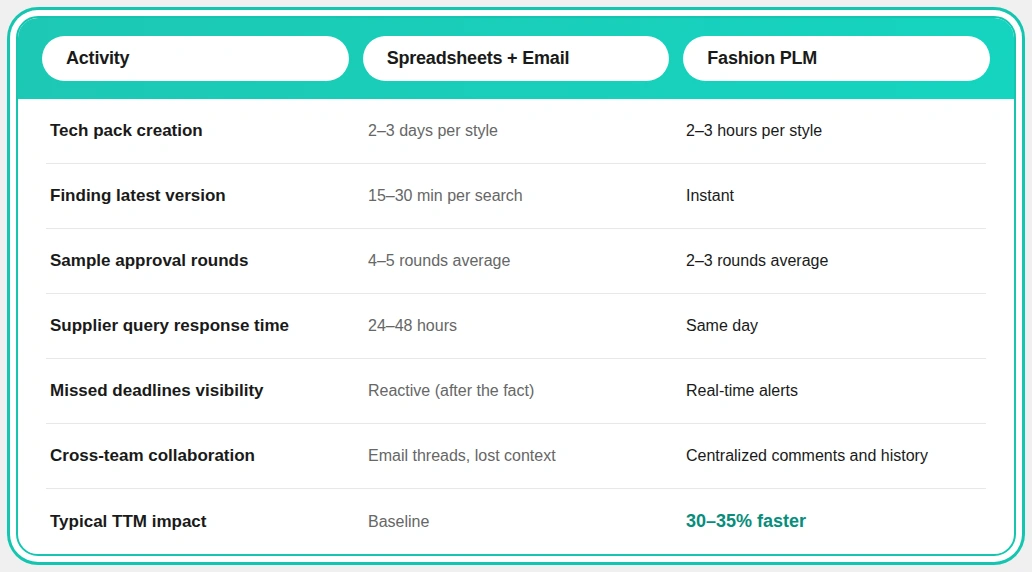
    PLM vs. Spreadsheets: Time-to-Market Impact

    plm-vs-spreadsheets

    Frequently Asked Questions

    How much can PLM software reduce time-to-market for a fashion brand? 

    Most apparel brands using fashion-native PLM software report a 20–40% reduction in time-to-market, depending on collection complexity and supplier base. WFX PLM customers have documented 30–35% TTM improvements (Benetton India, Noppies). 

    What is the difference between PLM and ERP in fashion? 

    PLM handles all pre-production activities: design development, technical packages, sample creation, material procurement, and sign-offs. ERP handles all activities during and post-production: ordering, stock management, accounting, and logistics. These platforms function optimally when connected — PLM transfers the finalized design to ERP for manufacturing. 

    How long does it take to implement fashion PLM software? 

    Deployment duration depends on company scale and requirements. Smaller-to-medium brands usually launch within 8–12 weeks, whereas larger organizations with global operations and vendor networks may require 4–6 months. Cloud-native PLM solutions like WFX install considerably faster than traditional on-premises systems. 

    Is PLM software just meant for big fashion brands? 

    Not at all. Modern cloud-based PLM suits companies of all sizes. Whether you run a small startup that sells to customers or manage a massive international business, it works for everyone. In fact smaller brands often notice greater benefits, like faster product launches and lower quality-related expenses, because they struggle more with inefficiencies. 

    Can PLM software work with design tools like Adobe Illustrator or CLO 3D?  

    Yes. The top fashion PLM systems connect with Adobe Illustrator, CLO 3D, Browzwear, and CAD tools. This lets designers send tech packs and CAD files straight into the PLM system without needing to re-enter anything. It helps avoid one of the biggest problems with managing different file versions. 

    What is the ROI of fashion PLM software? 

    Return on investment happens due to four main reasons. First, it results from cutting down on sampling rounds and reducing rework. Second, quicker time-to-markets allow more product drops each year. Third, launching on time helps lower markdown rates, reducing manual data management cuts overhead costs. Most brands see their PLM costs recovered in 12 to 18 months. 

    Conclusion

    Speed and flexibility guide how well brands perform in the fashion industry. Brands that bring products to market faster catch trends at full price. Those that delay often resort to marking down outdated stock. To shorten Time-to-market(TTM), Product Lifecycle Management software plays a crucial role. It helps by accelerating approvals, centralizing data, digitizing tech packs, enforcing timelines, and streamlining supplier communication.  

    WFX PLM is designed to serve the apparel industry. It offers strong tools for tech packs, sampling, sourcing, and working with suppliers. Well-known brands like Benetton, Noppies, and Mexx have used it to bring their products to market 30–35% faster. 

    Read Our Blogs

    ...
    Why Fashion Brands Need an Industry-Specific ERP Instead of a Generic One

    Fashion ERP vs. Generic ERP: Why Apparel Brands Need Specialized Software

    Read More
    ...
    Still Managing Apparel SKUs by Size & Color in Spreadsheets? It’s Costing You More Than You Think

    Still Managing Apparel SKUs by Size & Color in Spreadsheets? It’s Costing You More Than You Think.

    Read More
    ...
    Spreadsheets vs. PLM: Why Fashion Brands That Still Rely on Excel Are Falling Behind

    Fashion PLM helps brands replace spreadsheets with faster collaboration, accurate costing, and streamlined development.

    Read More