
Guide
The Fashion Brand's PLM Buyer's Guide for 2026
The ultimate guide to picking the fashion PLM software that fits best with you. Find out how to assess the features, vendors, and strategies for implementation.
Turn Inspiration into Ideas with WFX AI Moodboard
Learn more
Plan, design, develop, source and manage every collection on one cloud platform built for fashion, not a dozen spreadsheets. WFX keeps your teams and vendors on the same live data, and we are AI enabled to speed up the work that still slows fashion down.
.webp&w=3840&q=60)







Hundreds of styles, dozens of vendors, teams across time zones. One missed comment or wrong colorway can cost you the ship date and the margin. Generic PLM software was never built for the fashion industry.

Your team updates the tech pack. Your factory keeps cutting from the old one. Across every style and every vendor, that version gap costs you another sample round, more wasted fabric, and days your critical path can't spare. The right fashion PLM software closes that gap automatically.

Designs in Adobe, BOMs in Excel, comments in email, samples in Slack. Multiply that across a few hundred styles and by week 8 nobody knows which file is current. Your costing team rebuilds numbers from screenshots instead of protecting margin.

PP, TOP, and fit samples slip quietly, one style at a time, with no live view of the critical path to catch them. By the time merchandising sees the delay, the fabric was cut to the wrong width three weeks ago, and it's never just one style.
Five things change once your whole team works from the same data: seasons move quicker, operations get leaner, and the supply chain stops tripping over itself.
When every team works in one place, concept to production takes weeks, not months. Fewer sample rounds, less stalled development, and lead times that actually come down season over season.
Get off the scattered spreadsheets. With styles, specs, and costs living in one place, the numbers stay right through the whole lifecycle. No double entry, no rework, and none of the expensive mistakes that come from someone editing an old file.
Your suppliers work inside the system too, with tech packs and graded measurements they can read without a follow-up email. The Vendor Portal puts everyone on the same live data, so the email chains shrink and you can finally see what's happening across your supply chain.
All your product data sits on one cloud platform, connected right through to the storefront. Open APIs push and pull it in real time, so your teams and your site are working from the same information instead of two versions of it.
Set WFX up the way your business actually runs, backed by a team that knows fashion. It's visual, highly configurable, and quick to learn, so planning your ranges stays simple as you grow.
Follow a single style as it moves through WFX fashion PLM software. One connected record keeps every team and vendor in sync, and we're building AI into every stage of the journey.
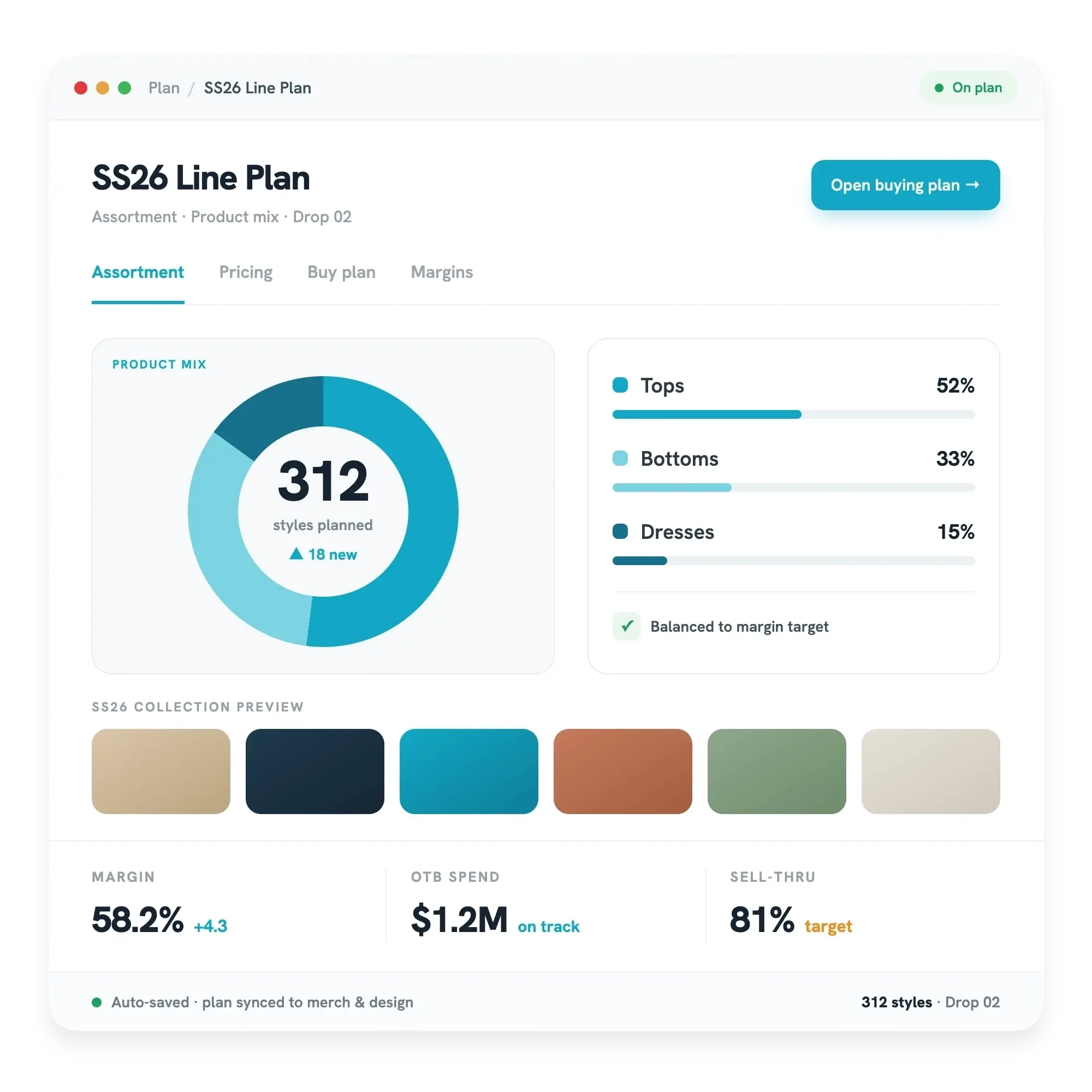
Generic engineering PLMs were built for cars and electronics, then bolted onto apparel. WFX fashion PLM software was designed from the first stitch, for apparel, footwear, and accessory brands that live in lab dips, fit comments, and critical-path calendars.
Colorways, fit types, lab dips, trims, and points of measure are built in, not custom fields you rig up yourself. Your design and development teams work in the language they already use. Nothing gets lost in translation, and everyone stays on the same version.
The AI we're building is made for fashion, not borrowed from another industry. Visual search across your archive. A tech pack reader fluent in fabrics, BOMs, and POMs. Intelligent product search and design concepts. Every WFX AI feature is built for apparel workflows, not generic data.
A real-time space where your factories quote RFQs, comment on tech packs, and upload inspection photos straight into your records. Everyone works off the same live screen, so there's never a stale PDF floating around email.
Plug-and-play connectors for your ERP, e-commerce, and production planning, plus a native Adobe Illustrator integration for design, with Browzwear on the way. WFX fits the stack you already run.
Traditional & Legacy PLM Systems for the fashion industry usually start as multi-industry engineering tooling, then get adapted to apparel. WFX PLM was built from day one for fashion, footwear, and lifestyle brands, which is why teams comparing the best PLM software for fashion keep landing here.
From boutique labels to global retailers, fashion brands run their whole lifecycle on WFX fashion PLM software and ship faster, leaner, and cleaner every season.

Sample volume in just 4 years, scaling to ~200 SKUs and 100+ materials a season, all managed in one platform.

Years running product development and costing on WFX, with all product and material data in one searchable hub.
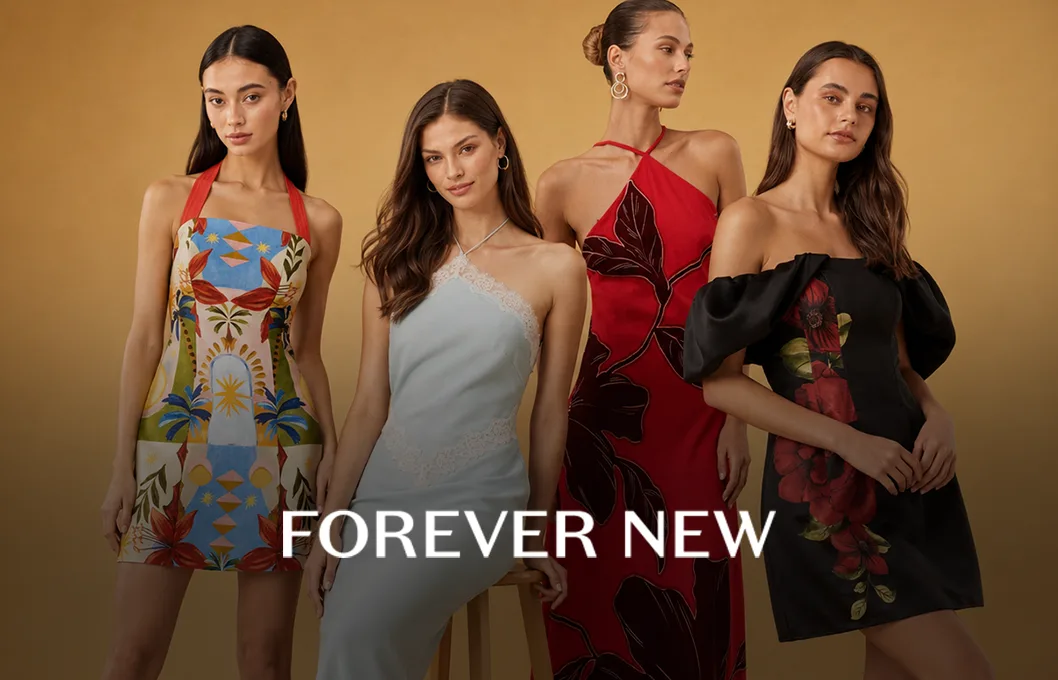
Shorter lead times, from first concept to final production.

Pieces of jewelry sourced every year, now run on one platform instead of a 25-year-old manual system.
Mid-market and enterprise brands managing hundreds of styles and global supplier networks. WFX connects planning, design, tech packs, costing, sourcing and quality on one platform, tuned to your category.
End-to-end PLM tuned for apparel & ready to wear, from line plan to factory floor.
End-to-end PLM tuned for footwear, from line plan to factory floor.
End-to-end PLM tuned for beauty & accessories, from line plan to factory floor.
End-to-end PLM tuned for activewear, from line plan to factory floor.
End-to-end PLM tuned for denim, from line plan to factory floor.
End-to-end PLM tuned for lingerie & swim, from line plan to factory floor.
End-to-end PLM tuned for kids & babywear, from line plan to factory floor.
End-to-end PLM tuned for home & soft goods, from line plan to factory floor.
Connect WFX fashion PLM software to your design tools, ERP, and online store. One source of truth, zero copy-paste.
 Adobe IllustratorDesign · Bi-directional
 Oracle NetSuiteERP · Bi-directional
 SAPERP · Bi-directional
 Microsoft DynamicsERP · Bi-directional
 AIMS 360Fashion ERP · Sync
 Browzwear3D Design · Sync
 MagentoE-commerce · B2B
 Open AIREST · Custom
Hear from the production, design, and IT leaders who run their seasons on WFX, in their own words.
I can confidently say that we would not be growing as much as we have and would not be able to grow further without WFX. WFX's digital tech packs, cloud-based accessibility, bulk upload, and vendor-friendly onboarding have been game-changers, fostering trust and accountability across the board.

Before WFX, a lot of production information was just in my head. Now with WFX, everything is accessible and organized. Our production team easily finds what they need, and our factories get their information directly, without constant back-and-forth emails. It's made life easier for everyone involved.


Can't find your answer? Talk to our solutions team.
Industry guides, customer stories, and AI deep-dives, written for the production, design, and tech teams running real seasons on fashion PLM software.

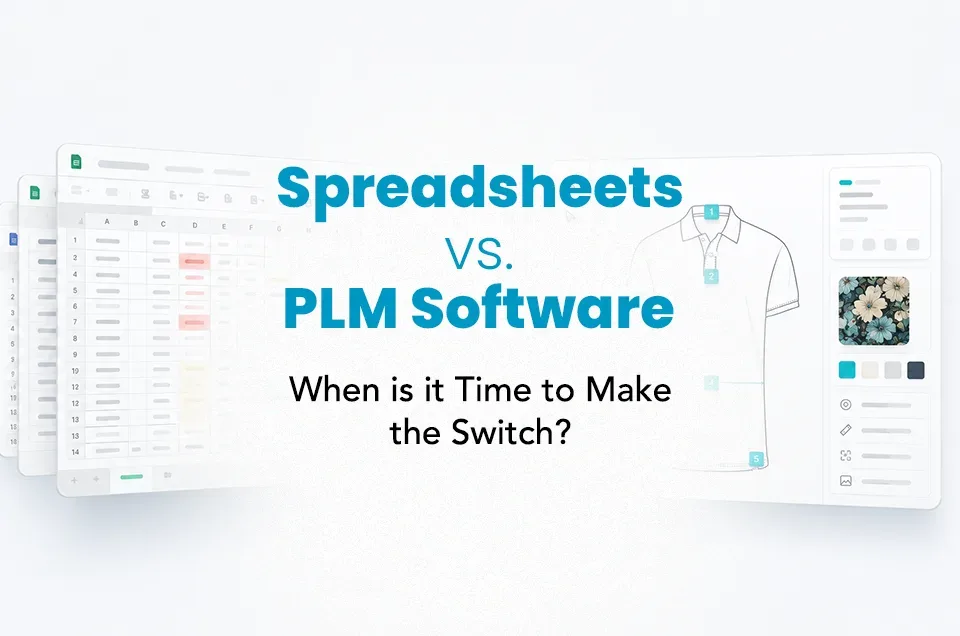
With WFX, we can have a scalable process as all product data is now in a unified database , and the settings can always be adjusted and refined to grow with the needs of our business.