Turn Inspiration into Ideas with WFX AI Moodboard

Learn more
PLM Software for Emerging & Growing Fashion Brands PLM For Growing Fashion Brands

PLM Software for Emerging & Growing Fashion Brands: What You Need to Know

12 mins read •

Fashion PLM software gathers your product information, specs, materials, costs, samples and supplier approvals, into a single place. The moment to start looking at PLM? When syncing those details is the thing dragging development, or letting avoidable mistakes through. Point the first rollout at whatever your team is wrestling with right now. More categories and suppliers can follow. 

Take a revised sleeve measurement. In theory, five minutes of work. Someone still updates the spec, gets it over to the factory, traces the affected sample, and confirms the next approval runs on the current version. 

With a handful of styles, that’s manageable. But stack a second collection on top, a new supplier, a wholesale deadline that won’t move, and this one little task is suddenly eating hours. 

That’s usually when the PLM conversation gets serious for a growing brand. Not because someone read a trend report, but because nobody can say how much time is going into keeping everyone on the same page. 

What is PLM software for fashion brands?

Product lifecycle management, PLM for short, joins product information with the processes around it. For fashion, that covers the working detail of each garment and accessory, artwork, measurements, fabrics, trims, costing and approvals, in one system rather than fifteen files. 

Oracle’s explanation of PLM software gives the broader definition: product information and processes managed end to end, documents, changes and quality workflows among them. Fashion-specific systems translate that into apparel terms, where colorways, size specs and sampling do the heavy lifting. 

One distinction matters here. Storing a document is one job. Managing the decisions behind it is another. Any shared folder can hold a tech pack. A PLM workflow handles the second: which version is approved, what changed since the last round, and who acts next. 

When does an emerging fashion brand need PLM?

Look at PLM when the same coordination problems keep turning up and you can put a number on them. Revenue won’t tell you. Neither will headcount. A five-person team building technically complex product can have a harder time of it than a fifty-person business selling a stable range. 

Look at what actually happened during the last collection: 

  • Did a supplier end up working off an old spec? 
  • Did the same material or measurement details get typed into three different files? 
  • Were costing calls made before the latest changes were in? 
  • Did fit feedback drift away from the sample it belonged to? 
  • Did someone spend an afternoon chasing people just to find out where one style stands? 

These questions carry your business case. Before any demo, put numbers on each one: how often it happens, the hours involved, what it cost the last time it went wrong. 

One more point before any software demo. PLM supports version control, sample-linked feedback and approval deadlines; who holds approval authority is a decision no software makes for you. Settle that first, or the uncertainty you have in email today simply moves house into the new system. 

Spreadsheets, to be fair, do the job for a small range with few revisions and one clear owner. Question them when the checking and reconciling hours climb month after month and never come back down. 

How can PLM help a growing fashion brand?

PLM earns its place on two fronts: product development becomes repeatable, and it stays under control as volumes rise. IBM’s guide to product lifecycle management names four essentials: centralized product data, version control, standardized workflows and structured change approvals. Those carry your handoffs as the team gets bigger. The return depends on the configuration, the state of your data, and how fully the team takes it up. 

Suppose a second supplier joins your bestselling shirt. That factory needs the approved spec, the fabric details, the measurement tolerances and the fit history that matters, and when those sit across six inboxes, someone rebuilds the product before anything moves. A maintained PLM record hands you the starting point; the supplier still gets qualified, samples still get reviewed, but nobody loses a week assembling information the business already owned. 

Access changes as you grow, too. The founder who signed off every detail in year one has no hope of doing it in year three. By that point fit sits with a technical designer, sourcing holds the quotations, and merchandising watches the range. Clear responsibilities and defined approval steps carry that handover. 

Which PLM features should growing brands prioritize?

Begin where your delays live. The table below is a demonstration checklist; nobody needs every row solved on day one. 

Capability to evaluate  Problem it should help solve  What to ask the vendor to demonstrate 
Tech packs and version history  Suppliers using outdated details  Change a measurement and show how the approved version is identified 
Material library and bill of materials  Repeated entry of fabric and trim information  Reuse a material and show which styles reference it 
Costing and quote comparisons  Decisions based on incomplete or inconsistent costs  Compare supplier quotes using matching quantities and assumptions 
Sample tracking and feedback  Comments disconnected from sample rounds  Record fit feedback against a specific sample and assign follow-up work 
Supplier access and permissions  Unclear handoffs or excessive data access  Show what each supplier can see, edit and acknowledge 
Collection milestones  Delays discovered after a deadline slips  Identify overdue approvals and the person responsible 
Integrations and data export  Duplicate entry or difficulty moving data  Transfer a real product record and explain ownership of each field 

WFX’s tech pack capabilities, for example, span measurement tables, bills of materials and product specifications. Whichever vendors you evaluate, have the demo run on one of your own styles; the team learns more from a style they know than from a canned sample. 

Look past the flashy parts of the demo. The boring tasks are the tell. How many clicks to revise a measurement? Can someone find the latest fit comments without asking around? Daily adoption rests on details this small. 

Do you need PLM if you already have ERP?

PLM and ERP aren’t rivals. They mostly look after different parts of the business. Product definition and development sit with PLM, while Oracle’s definition of ERP covers the daily running of the company, accounting, procurement and supply chain operations included. The boundary shifts from platform to platform, and some ERP suites carry PLM capabilities of their own, so take stock of what you already run before signing for anything new. 

Buying question  Fashion PLM commonly supports  ERP commonly supports 
What product information needs control?  Specifications, materials, revisions and development approvals  Item records and data used in business transactions 
Which work needs coordination?  Design, technical development, costing and sampling  Procurement, inventory, finance and operational execution 
What problem should the demo address?  Which specification is approved, and what still needs development approval?  What has been ordered, received, stocked or invoiced? 
What should you check before buying?  Supplier workflows, version control and connections to existing systems  Whether the current suite already provides suitable PLM capabilities 

Capabilities overlap, and every product draws the lines differently. Use the table to frame what you need, then hold the proposal’s actual modules and integrations against it. 

Before adding another system, get an honest picture of where today’s setup falls short. Inventory and accounting humming along while fit comments and specs live everywhere and nowhere? Your gap is product development. Warehouse stock accuracy the real headache? Then a PLM project alone won’t touch it. 

If an integration is on the table, decide early which system owns each record and what triggers a transfer, and review WFX’s integration options while your requirements are still in draft. 

How much should a growing brand budget for PLM?

The subscription is the smallest line on a realistic PLM budget. Setup, migration, integrations, training, plus the internal hours adoption actually takes, all belong on it too. And compare proposals over the same scope and the same time period, or the comparison means nothing. 

Get each vendor to break the costs out for you: 

  1. User licenses, supplier seats and any minimum commitments. 
  2. Configuration and implementation services. 
  3. Data cleanup, who takes responsibility for migration and what that will cost. 
  4. Integration setup plus ongoing maintenance. 
  5. Training, support, and the price of expanding later. 

Build the ROI estimate from your own operating costs, nobody else’s. Say four people each lose two hours a week to tidying product files. That’s eight team-hours, gone, every week. Now work out how much of it the proposed workflow takes off the table. And remember, recovered time is capacity. It turns into a cash saving only when you put that capacity to work. 

Track sample costs and spec-related rework on their own lines, and count each cost once. A sample-round estimate that already includes internal labor? Those hours aren’t an extra saving on top. Faster development is its own measure as well. Real business value, yes, but not automatically money in the bank. 

How should you choose fashion PLM software?

Pick the platform your team can run its real products through, with costs and responsibilities in writing. A slick presentation proves very little. A working demo of your own process proves a lot. 

Hand every shortlisted vendor the identical brief: create a style, add materials, revise a measurement, ask for a quote, sign off a sample. Then spring a last-minute change on them and watch what happens to the connected records. 

Put actual users in the room for the evaluation. A technical designer spots the missing measurement workflow a procurement reviewer walks straight past. Supplier access in the rollout plan? Then a supplier belongs in the evaluation too. 

Data export, access controls, support arrangements, the cost of adding users or categories: check all of it. And push for a customer reference whose workflow looks like yours, not just a famous logo. 

How should you assess AI features in PLM?

Run the AI features against work your team already does, nothing hypothetical. Tech pack reader? Lay the extracted measurements and material details beside the original and compare line by line. Product search? Then ask the harder question: would anyone on the team reach for those results in the middle of real work? 

Three answers matter here: what needs a human sign-off, how corrections get logged, and where uploaded data ends up. Speed of extraction counts for little if nobody can verify the product record before it reaches a supplier. 

How can a small team reduce disruption during PLM implementation?

Start small. A clear pilot, one named owner, a handful of product records you can actually keep on top of. The first rollout has exactly one job: prove the workflow survives daily use. 

  1. Define one thing you need to see improve. Make it measurable, maybe the time it takes to reconcile specs, maybe the wait on a sample approval. Record where you stand today, gaps included. 
  2. Choose a pilot that mirrors real development. One category, a workable batch of styles from normal work, plus the people and suppliers who handle those handoffs every week. 
  3. Get the product records in shape. Clean the active styles, materials and supplier details, settle the naming conventions, and give each record one person who keeps it current. 
  4. Test the whole workflow. Take a real product through spec, costing and sample approval. Then throw a revision at it. Can everyone still tell which version is right? 
  5. Train the team and switch over. Training sticks when people use it the next morning, so schedule it late, and set a firm date for PLM to become the approved record within the pilot scope. 
  6. Review before expanding. Compare the pilot against its baseline, work through the usability complaints, and only then choose the next category or workflow. 

Historical data? Review it on its own timetable rather than importing it wholesale. Hold the first scope to what the team can keep accurate. For the step-by-step version, the fashion PLM implementation guide walks through the full checklist. 

Every rollout runs on its own clock. Data quality, scope, integrations and your team’s bandwidth all pull on them. WFX PLM can be rolled out within 8–12 weeks, depending on workflows, integrations and data requirements; weigh that schedule against your own project plan all the same. 

Build a product development process that actually grows with your brand

Every added style, supplier or collection loads a little more onto how your team works right now. The product information underneath has to hold while responsibilities spread and new names join the approval chain. 

WFX Fashion PLM gathers collection planning, tech packs, costing, sampling and supplier collaboration into one shared workspace, where a technical designer updates the spec, sourcing reviews the costs behind it, and the whole team follows approvals on a single style record. 

Frequently asked questions

Can a small fashion brand use PLM? 

Yes. PLM begins to pay for a small brand once product complexity, supplier coordination or constant revisions push the current process out of easy reach. Set the effort and full cost against the problems in front of you, not the size of your team. 

Can PLM replace every spreadsheet? 

It replaces the spreadsheets doing product workflow duty inside its scope. Most teams keep a few spreadsheets for analysis and one-off jobs, and that’s fine, provided everyone agrees which system holds the approved product record. 

Do suppliers need access to the PLM system? 

Supplier access earns its cost when suppliers submit quotes, review specs or answer feedback inside PLM. Confirm the licensing, permissions and training it involves, and how approvals get recorded; a portal nobody logs into returns nothing. 

What should a brand prepare before requesting a PLM demo? 

Bring a representative tech pack, a material list, a supplier quote and a sample approval history. Describe one recent problem and let the vendor work that exact situation through. Comparing systems against real requirements becomes far simpler. 

Read Our Blogs

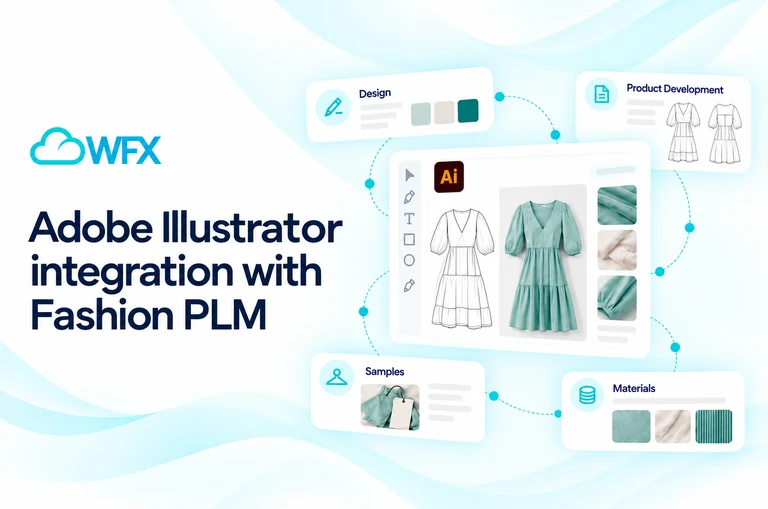
Fashion PLM with Adobe Illustrator Integration: How to Choose the Right One

Discover how WFX Fashion PLM connects Adobe Illustrator artwork, styles, colourways and tech packs through bidirectional integration.

Read More
Fashion PLM Implementation Guide: From Planning to Go-Live

A practical guide to fashion PLM implementation, from planning and data migration to go-live.

Read More
Best PLM Software for a $100M Apparel Brand in 2026

Discover the best PLM software for $100M apparel brands, comparing features, integrations, implementation, and costs.

Read More