Is WFX suitable for a $100M apparel brand?
Yes. WFX positions Fashion PLM for mid-market and enterprise fashion brands managing multiple collections, categories, teams and suppliers. Fit should still be confirmed through a proof of concept using the brand’s workflows, integrations and data.
Is $100 million in revenue large enough for PLM?
Revenue does not set a minimum for PLM. A brand needs PLM when product volume, versions, teams, suppliers and approvals make spreadsheets and email difficult to control. A $100 million apparel business will often have that level of complexity.
What is the difference between fashion PLM and a tech pack tool?
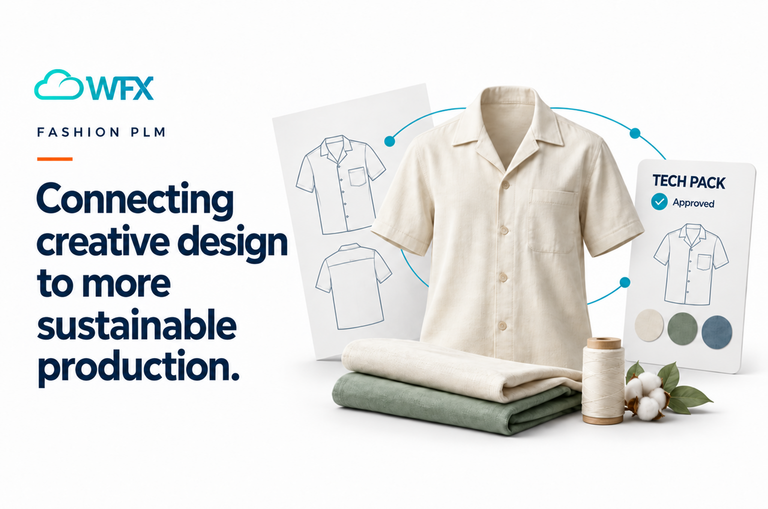
A tech pack tool focuses mainly on product specifications. Fashion PLM connects specifications with collection planning, materials, costing, sampling, approvals, critical-path dates and supplier work across the product lifecycle. See WFX tech pack software.
Should PLM integrate with ERP?
Yes, when PLM owns product-development data that ERP needs for purchasing, production, inventory or finance. The companies should define which system owns every field, when data moves, how changes are approved and how integration failures are handled. See PLM vs ERP in the WFX PLM guide.
Which WFX integrations matter most to apparel brands?
WFX publishes integrations with Adobe Illustrator, Oracle NetSuite, SAP, Microsoft Dynamics, AIMS360, Shopify, Magento, FastReact, CLO, Comestri and Sage, plus an open REST API. Confirm the required connector’s current availability and exact data flow during evaluation.
What AI features should an apparel PLM have?
Useful AI should reduce work inside governed product processes. WFX currently publishes product search, AI Moodboards, design concepts, PDF tech pack creation, visual product search and attribute generation. Buyers should test accuracy, correction effort, permissions and traceability with their own data.
How many PLM vendors should a brand shortlist?
Three to five vendors are usually enough for structured comparison. A longer list consumes subject-matter experts’ time without improving the decision. Use written screening criteria before scheduling detailed demonstrations.
What should a fashion PLM RFP include?
A fashion PLM RFP should include product categories, annual style and SKU volumes, user roles, supplier counts, required workflows, integrations, migration sources, security needs, reporting, implementation responsibilities and five-year commercial assumptions.
How was this guide evaluated?
WFX prepared this guide using publicly available product information from WFX, Centric Software, PTC, Bamboo Rose and Infor. The assessment considers fashion workflow coverage, supplier collaboration, integrations, implementation, adoption and commercial scope. Vendor sources are linked in each platform section and alongside customer outcomes.
The recommendations describe where a platform may fit; they do not establish an independently tested ranking. The weighted scorecard is a starting framework for buyers to adapt and use during demonstrations, not a record of vendor test results. Final selection should follow the same proof of concept, scope review and commercial comparison for every shortlisted vendor.
 AI Solutions
 Contact Us