Get an Exclusive Preview of the World's First AI Planner

Learn more
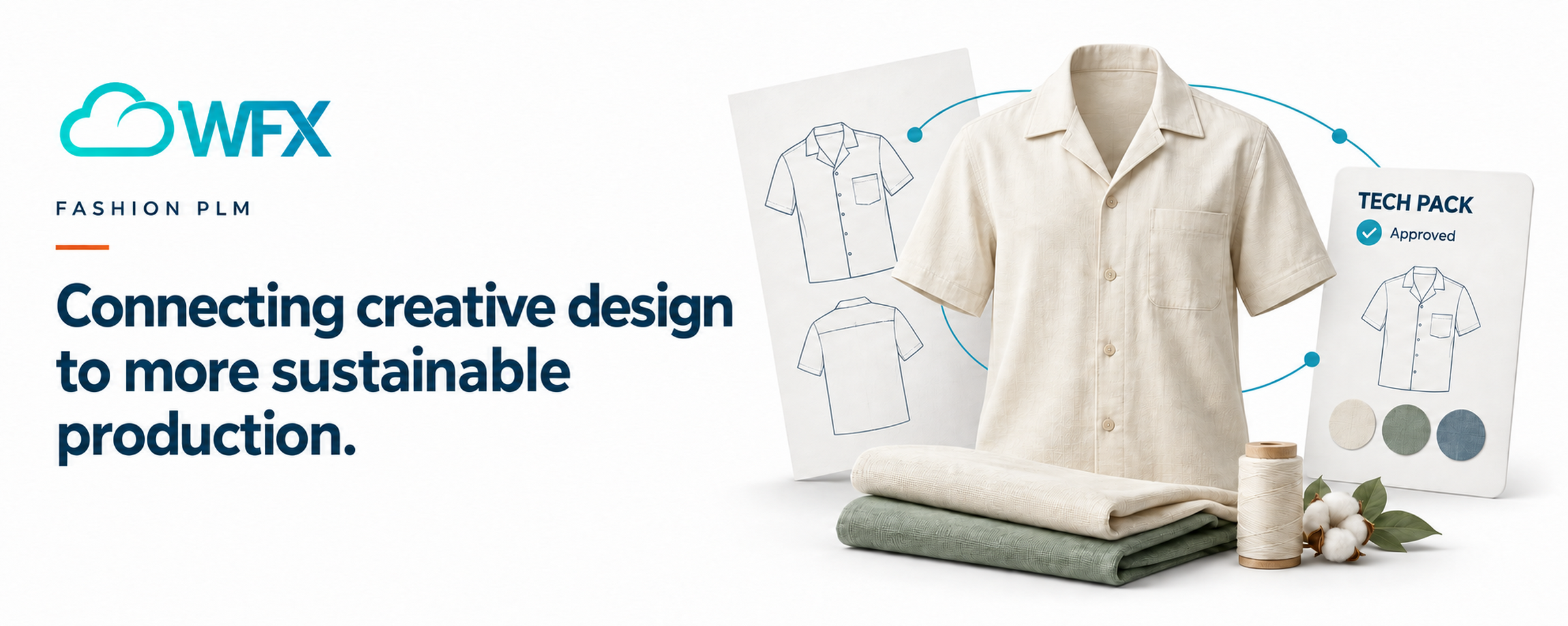
PLM Software Connects Creative Design and More Sustainable Production Fashion PLM Software Connects Creative Design and More Sustainable Production

How Fashion PLM Software Connects Creative Design and More Sustainable Production

10 mins read • 17th, Sep 2026

A production problem can begin long before a style reaches the factory floor. Design calls it finished. Production starts turning it into instructions. Somewhere in between, a measurement changes, a trim gets replaced, or an approval stays behind in an email thread. 

Fashion PLM software helps connect that handoff by bringing product specifications, materials, costing, sample feedback and approvals into a shared system. Teams can work from a clearer product record as a style moves toward production. WFX’s fashion PLM overview describes these connected development workflows. 

The practical question is simple: can everyone identify the version approved for production, understand what changed, and see who needs to act? 

Where Your Handoff Breaks

Picture a style moving from design into sourcing and production. The sketch looks finished. The cost has been discussed. A sample has been reviewed. Yet the information behind those decisions may still sit in different places. 

Nobody agrees on what “current” means. Design is working on version four. Sourcing has a quote against version three. The factory received version two. Each team has a file that looks usable, but the measurements, materials or price may no longer match. 

Ownership gets blurry after “final.” Someone adjusts the fit or substitutes a trim after approval. The change makes sense to the person making it. Downstream, it may affect a material booking, a sample or an agreed cost. Without a clear release process, the update can travel further than the decision behind it. 

Approval lives away from the specification. A “looks good” in an email is hard to interpret later if nobody can tell which sample, measurement sheet or material it referred to. 

When a sample comes back wrong, compare the instructions the factory used with the revision the brand believed it had approved. That is where a mismatch can become visible. 

How Fashion PLM Software Helps Fix the Handoff

The first step is to connect the specification with its revision history, feedback and approval status. A useful handoff lets the receiving team understand both the instructions and the decisions behind them. 

Digital tech packs help organize measurements, construction details and the bill of materials, or BOM. Some tech pack tools also support collaboration and version control. Fashion PLM can place that information alongside the wider development work, including costing, sampling and supplier coordination. The scope varies by platform. 

For the handoff itself, focus on three controls: 

  • Identify the approved production revision. Keep its status clear even when the design team starts a newer draft. Factories need to know which instructions apply to the order they are making. 
  • Keep the decision with the relevant record. Specify what was approved, who approved it and whether any conditions remain. A fit approval should not leave people guessing about material or costing approval. 
  • Make later changes actionable. Show what changed, which orders or samples are affected, who must review it and when it takes effect. Ask the receiving team to confirm the revision it will use. 

WFX Fashion PLM is one example of this approach. Its tech pack tools bring measurements, BOM details, comments and version management together. Teams can also record sample feedback and approvals, while its Vendor Portal supports shared communication and notifications about updates. 

Those capabilities give the process somewhere to live. The brand still needs to define its release rules, permissions and supplier acknowledgment process. A notification should prompt confirmation of the change before the factory acts on it. 

Who Actually Owns the Handoff?

Design may consider a style finished once the creative and technical decisions are approved. Production needs to know whether the instructions are complete enough to use. Both views can be reasonable while leaving a gap between them. 

Give that gap a named owner. Depending on your structure, a product development, technical design or production lead could coordinate the release. The role is to check that the required decisions are complete, make unresolved exceptions visible and confirm that responsibility has passed to the receiving team. 

The owner does not have to make every decision. Design can own the design intent, technical teams the fit and construction, and sourcing the supplier and material commitments. What matters is that someone can explain why the style is ready to move forward. 

That accountability should remain visible when a change comes in after release. Who reviews the impact? Who approves the revised instructions? Who confirms the factory has switched to them? 

What Should Be Confirmed Before Production Starts?

Use the following as a recommended handoff checklist. Adapt it to your product category, approval stages and supplier workflow. 

Handoff check  What the receiving team should be able to confirm 
Approved tech pack  The style, revision and release status that apply to this production order. 
Materials and BOM  The approved fabrics, trims and components, including accepted substitutions. 
Measurements and construction  The relevant specifications, tolerances and construction instructions. 
Samples and approvals  The required sample decisions, their scope and any conditions still open. 
Costing and sourcing  Whether the agreed cost and supplier commitments reflect the approved specification. 
Exceptions and ownership  Each unresolved issue, its owner and whether it prevents production release. 
Supplier acknowledgment  Confirmation that the receiving team has the applicable revision and understands the changes. 

Consider a simple example. A dress passes its fit review, then the original lining becomes unavailable. Sourcing finds an alternative. Before that substitution reaches the factory, the team needs to review its effect on construction, cost and any relevant material requirements. 

The handoff should show the approved replacement and the affected order. If the earlier instructions have already reached the factory, someone needs to confirm which revision will now be used. Updating the BOM is one part of that work; completing the review and communicating the decision makes the update usable. 

How Does a Better Handoff Support More Sustainable Production?

A clearer handoff can help preserve material decisions and avoid rework caused by outdated instructions. These are practical ways to support more sustainable production, provided they lead to actual changes in what the business makes and uses. 

The material itself still matters. UNEP’s 2020 Sustainability and Circularity in the Textile Value Chain: Global Stocktaking identifies synthetic fibre production and wet processing, including bleaching, dyeing and finishing, among the important stages for climate impacts. It also identifies impacts during product use. Better document control addresses only part of that wider picture. UNEP’s textile value-chain assessment 

Applied to a handoff, the practical implication is to keep the approved material specification, the reason for a substitution and the supporting evidence together. A change in fabric composition or finish should trigger a review of the requirements attached to that choice. 

If a product uses certified materials, the evidence needs checking too. Textile Exchange’s Content Claim Standard describes documented material flows and independent verification as part of tracing certified content. Storing a certificate in a product record is only one part of that process. Textile Exchange’s Content Claim Standard 

There is also the opportunity to avoid making a replacement sample because an earlier one followed an obsolete specification. Track those cases separately from samples needed to test fit, quality or a new design. That distinction helps the team see which repeat work better information could prevent. 

PLM software alone does not establish a lower environmental footprint. Measure changes in sample use, rejected materials and rework, then assess environmental outcomes using appropriate material and production data. 

What Changes Once the Handoff Is More Reliable?

The immediate benefit is confidence in the instructions. Production can check which revision applies. Design can see whether a later change needs another review. Sourcing can identify whether a quote still matches the approved BOM. 

That gives the team a better basis for discussing deadlines. A tighter calendar is easier to assess when the open decisions are visible and the factory has confirmed what it will make. Material delays, fit problems and capacity constraints still need their own attention. 

To see whether the handoff is improving, track the share of released styles with complete approvals, the time taken to confirm a revision and the number of repeat samples linked to outdated specifications. Compare similar products and sample stages, and record the reason for each repeat. These are suggested measures for your own baseline, not industry benchmarks. 

For the wider development calendar, see how PLM software can help fashion brands reduce time-to-market. 

Signs Your Handoff Needs Attention

Look for patterns such as these: 

  • Production keeps asking about specifications design considers finished. 
  • A revision reaches some teams while others continue using the earlier instructions. 
  • Nobody can identify the approval behind the version currently being used. 
  • Costing changes after sourcing begins because the quote and specification no longer match. 
  • A material substitution reaches the factory before all affected teams have reviewed it. 
  • A repeat sample traces back to an outdated file. 

Several of these happening together are a reason to inspect the handoff. Start with the last affected style and follow its actual records. Check what was approved, what was sent and what the factory used. That gives you a specific process to improve. 

Frequently Asked Questions

What causes the disconnect between fashion design and production teams? 

One cause is a mismatch between the information each team uses. Design, sourcing and production may have different revisions, while approval remains in a separate message. A clearer handoff identifies the approved specification, records the relevant decisions and confirms which revision the receiving team will use. 

How does WFX Fashion PLM support the design-to-production handoff? 

WFX Fashion PLM supports tech pack version management, shared product information and supplier collaboration. Its documented sample management features include feedback, approval decisions and vendor notifications. The brand still needs to define how those capabilities support its production-release and change-review process. 

Is this the same problem digital tech packs solve? 

There is overlap. A digital tech pack organizes the instructions needed to develop and make a style, and some tools also manage revisions and feedback. A reliable handoff additionally requires agreement about approval scope, release ownership and how later changes reach the teams using those instructions. 

What is the difference between a design tool and fashion PLM software? 

A design tool supports creating and refining the product’s visual or technical design. Fashion PLM coordinates the product information and development activities around it, such as materials, costing, sampling and supplier communication. The tools can work together; their integration and exact capabilities vary. 

Who should own the design-to-production handoff? 

Assign an accountable release owner suited to your organization, such as a product development, technical design or production lead. That person coordinates the required sign-offs and confirms the receiving team has the applicable revision. Individual functions retain responsibility for their own decisions. 

Can fashion PLM software make production more sustainable? 

It can support better material-information management and help teams address avoidable rework. The environmental result depends on the materials, production processes and actual changes in resource use. Measure those outcomes before claiming an improvement in footprint; using PLM is not evidence of that improvement by itself. 

Make the Approved Version Easy to Trust

The handoff becomes more reliable when the next team can answer three questions: what are we making, which revision is approved, and who acts if it changes? 

Start with one style that recently caused confusion. Put its specification, approvals and supplier correspondence side by side. Find the point where the instructions stopped matching the decision. That is where your process needs a clearer owner, a better record or a confirmed change. 

Read Our Blogs

Top 9 Apparel ERP Solutions Software in the World for 2026

Compare eight apparel ERP platforms by industry fit, manufacturing capabilities, pricing, deployment and scalability.

Read More
When More SKUs Stop Creating Growth and Start Creating Cost

Discover why SKU proliferation increases complexity, weakens margins, and makes assortment growth increasingly expensive.

Read More
The 7 Best Fashion PLM Software for Global Apparel Brands in 2026

Discover top Fashion PLM software solutions helping apparel brands streamline product development in 2026.

Read More