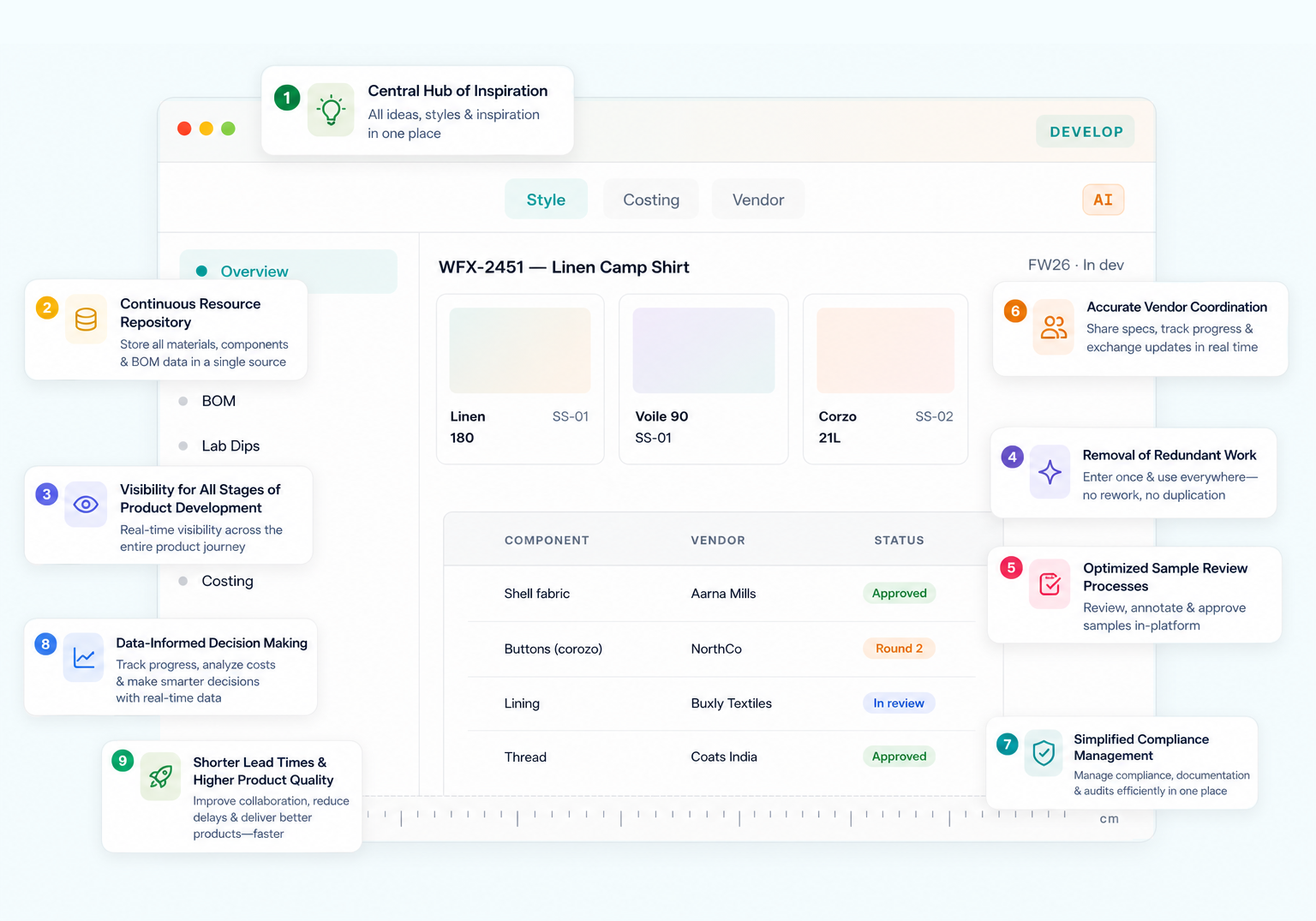
Here are the key benefits of using PLM software, especially solutions designed specifically for fashion brands and their product-development workflows.
1. Central Hub of Inspiration
PLM creates an environment where your team can come up with creative design ideas and manage them. The system will enable you to store various styles, prints, embroidery, and inspirational images.
It ensures that no ideas are wasted, and collaboration within your teams becomes easier irrespective of their locations. PLM will help the newly hired employees get a grasp on what was done before and minimize any mistakes caused by misplaced data.
2. Continuous Resource Repository
PLM software helps you create a systematic database for storing all the components like fabric, decorations, buttons, and zippers used in the production process.
All the data related to your BOM (Bill of Materials) – basic, seasonal, and ongoing – can be saved in one place. This will guarantee consistency between all departments and eliminate the need for coordinating data across multiple systems.
3. Visibility for All Stages of Product Development
Limited transparency is one of the most common problems faced in the product development process.
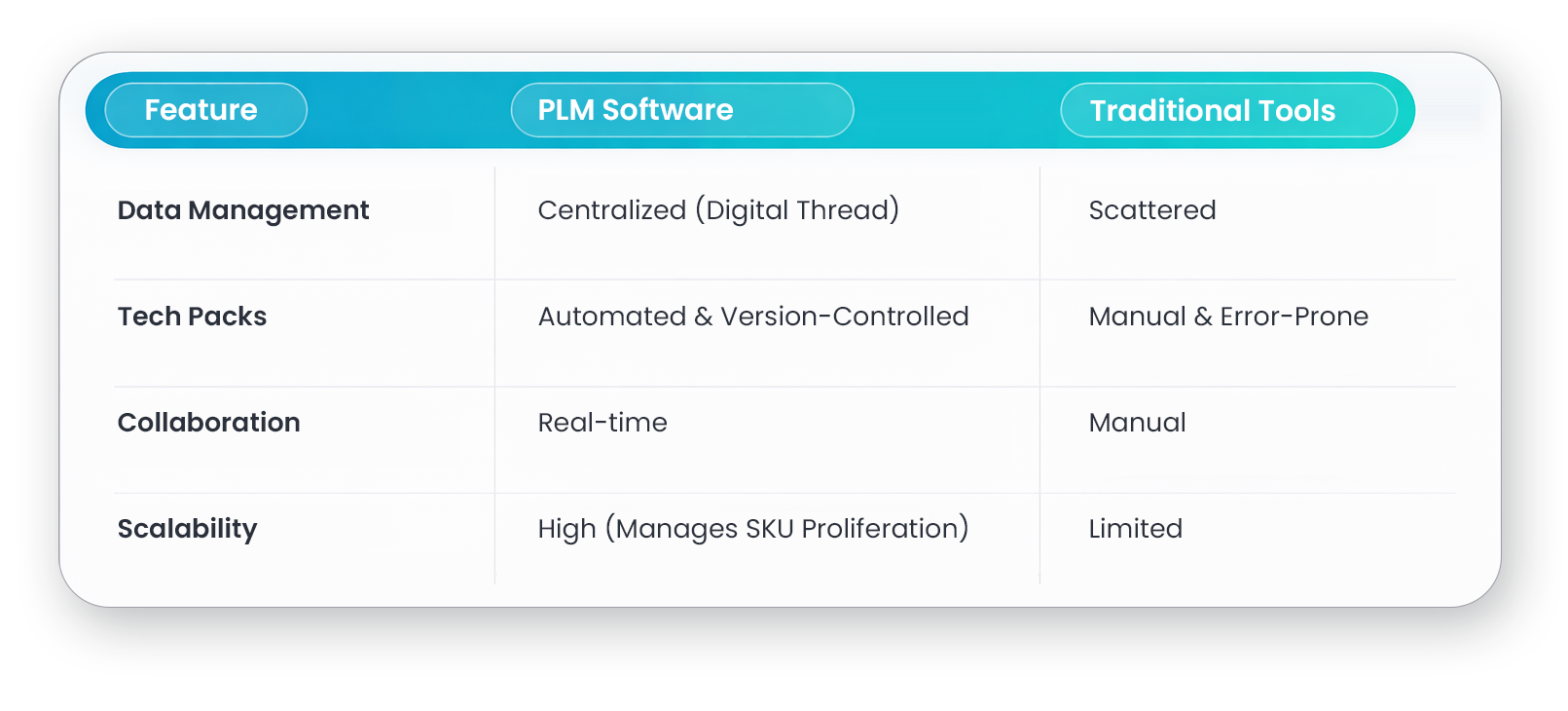
PLM systems create a Digital Thread, making sure that all the stages of your product creation journey become visible for your teams.
4. Removal of Redundant Work
When all departments operate within a unified PLM environment, redundant efforts are substantially reduced.
Product information —specifically detailed Tech Packs— requires entry only once and becomes accessible throughout various processes. Supervisors can observe advancement instantaneously, decreasing the necessity for persistent check-ins and enhancing overall productivity.
5. Optimized Sample Review Processes
PLM streamlines the sampling and validation workflow by enabling departments to initiate, examine, and authorize samples directly within the platform.
Input can be communicated via marked-up visuals and comprehensive annotations, minimizing dependence on email exchanges. This enhances precision, decreases sample revisions, and expedites authorization cycles.
6. Accurate Vendor Coordination
Successful vendor coordination proves essential in fashion manufacturing.
A PLM platform enables organizations to distribute product specifications and Tech Packs with vendors via a unified interface. Vendors can refresh manufacturing progress, share sample photographs, and address input instantaneously.
This minimizes misunderstandings and guarantees all parties operate with the latest available data.
7. Simplified Compliance Management
Fashion companies have to comply with many compliance requirements for different products.
A PLM solution allows managing compliance requirements, documenting compliance, and conducting audits efficiently. All data is available from one location, making the process easier and error-free for auditors.
8. Data-Informed Decision Making
PLM delivers real-time updates about product progress.It helps businesses track deadlines, analyze costs, pinpoint problems, and spot delays. This knowledge allows teams to make smarter decisions when needed, especially when managing SKU proliferation across multiple global markets.
9. Shorter Lead Times and Higher Product Quality
Good teamwork and proper controls create high-quality products.
PLM manages every step of the development process and shortens lead times. It works well for teams, no matter where they are. It also helps new team members grasp past work and minimizes mistakes caused by messy or paper records.

 AI Solutions
 Contact Us