AI Solutions
 Contact Us





















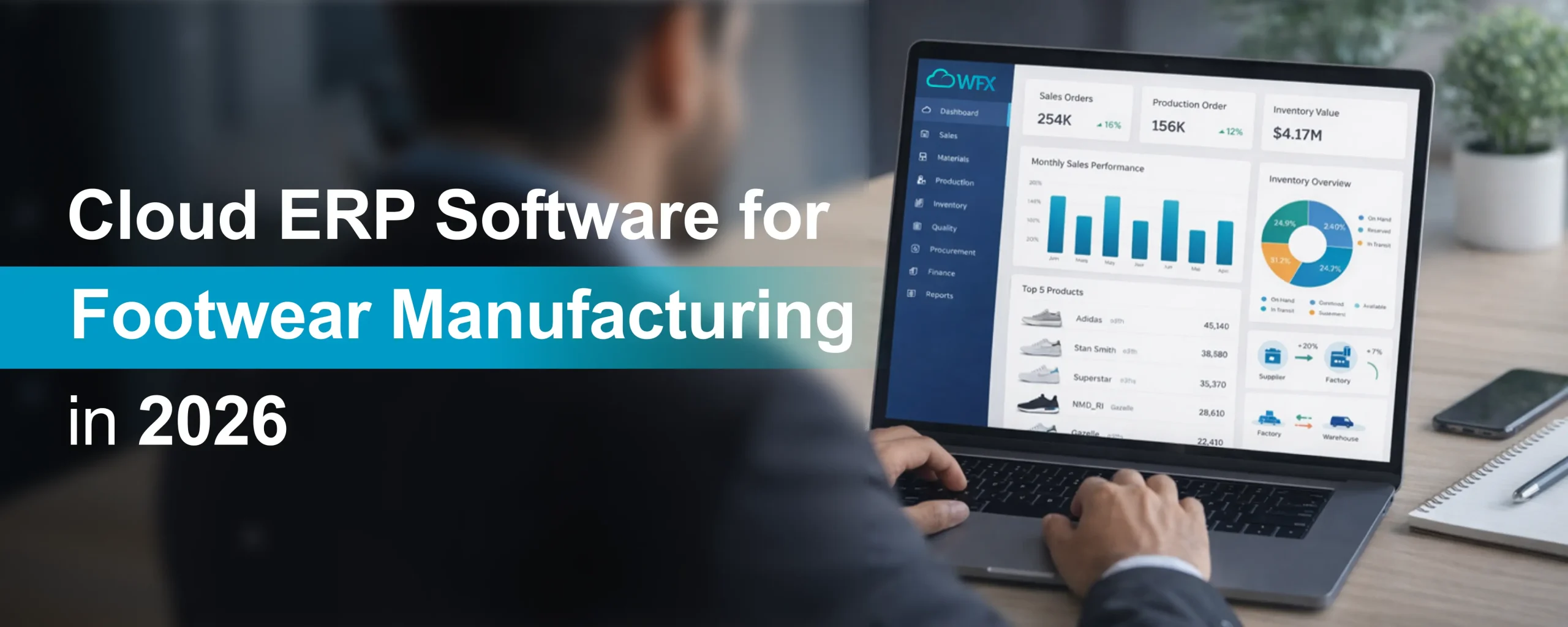
The footwear industry is changing fast. Global supply networks shifting fashion demands more product options, and growing customer needs have made operations tougher to handle. Footwear businesses have to handle a lot, from coming up with designs and finding materials to planning how to make products tracking inventory and delivering goods.
In the past or even today, many manufacturers relied on spreadsheets, disconnected tools, or outdated software installed on-site to manage these processes. But these older systems often create isolated data, slow down decisions, and make teamwork harder. In today’s competitive market, such problems can hold businesses back and hurt their productivity.
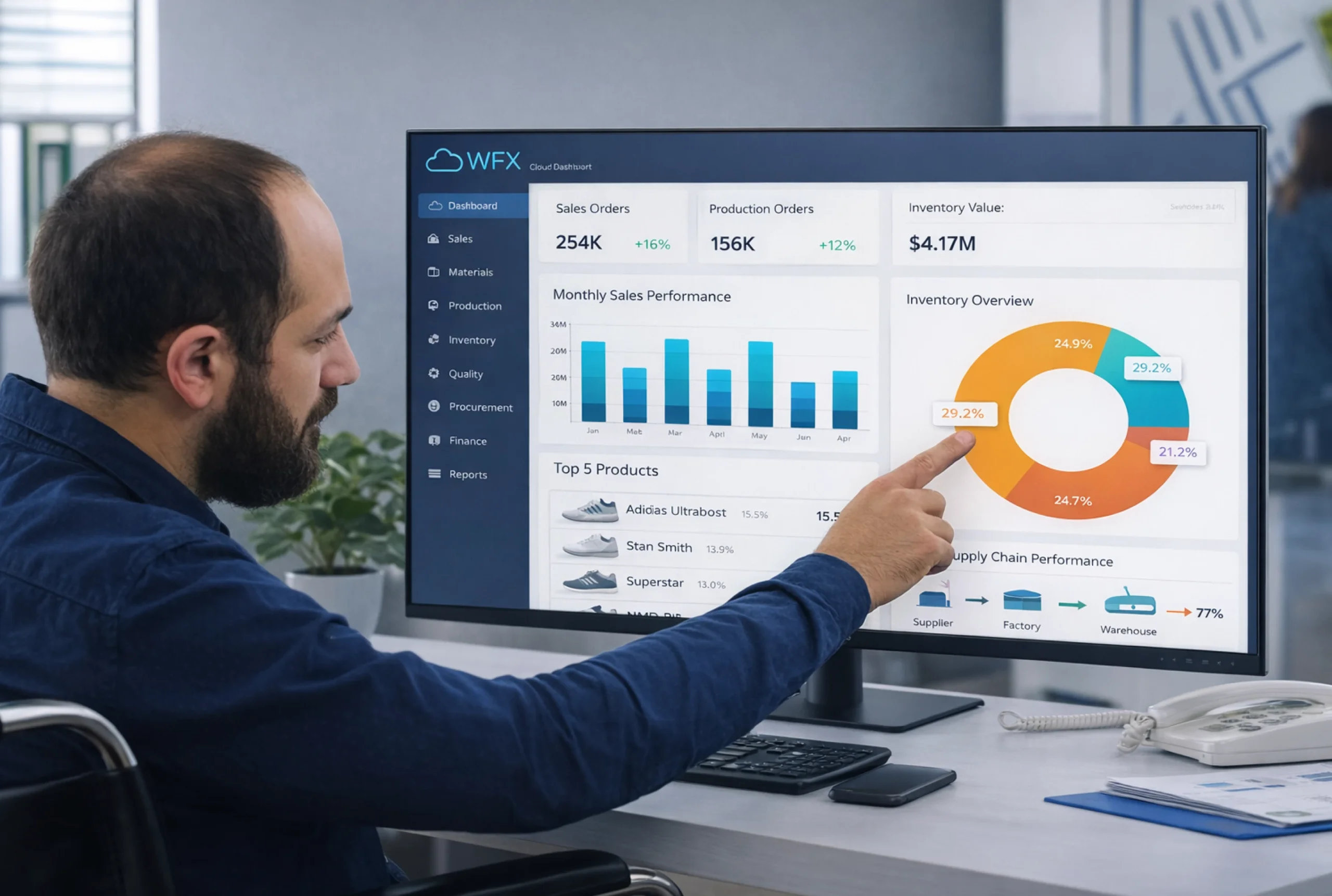
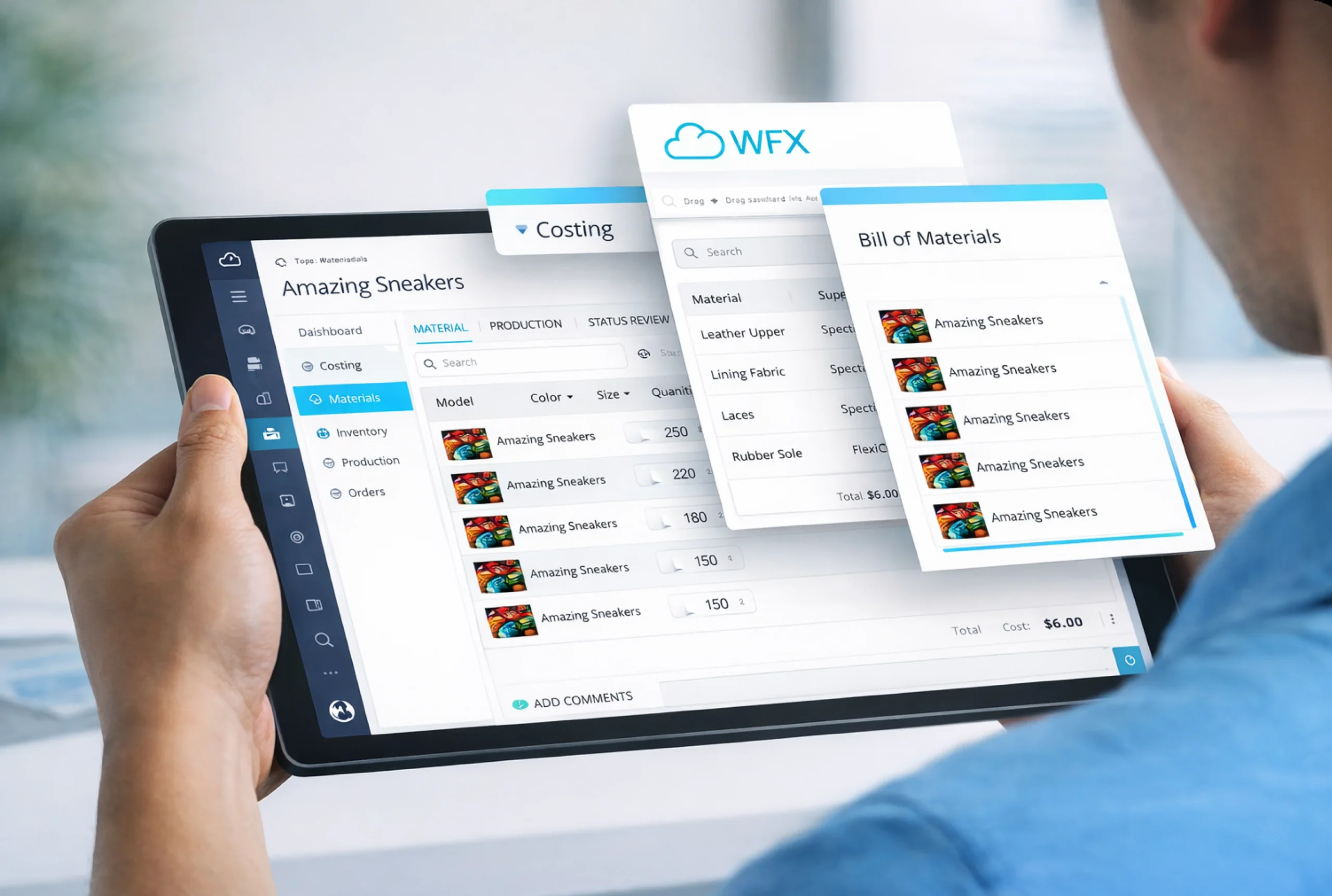
Cloud ERP systems are transforming how footwear companies handle manufacturing work. These advanced tools gather important aspects like production, sales, inventory, procurement, and finance into one unified platform. Manufacturers can use this setup to get live updates on their operations. It allows them to streamline tasks and make better choices to expand their business.
In addition, emerging technologies such as Artificial Intelligence and Product Lifecycle Management are also making ERP systems even better. AI takes over boring repetitive tasks and provides predictions to guide decisions. PLM solutions make it easier to manage product development from initial ideas to final production. When used together, these tools build a strong digital system that helps footwear manufacturers work more, spend less, and launch products faster. According to McKinsey’s State of Fashion report,fashion companies are increasingly dealing with faster product cycles and higher complexity.
In this article, we look at how footwear makers can pick the best cloud ERP system in 2026 and how AI and PLM tools are driving changes in manufacturing.