The Future of Fashion Manufacturing Starts in 2026

Learn moreright arrow

The Digital Apparel Revolution: Why 2026-2030 Will Redefine Fashion Manufacturing Forever

11 mins read • 20th, Jan 2026

Introduction

2026 is set to be the most pivotal year for the online fashion industry. 

The main drivers for this change are:

  • Global e-commerce sales are expected to hit $6.88 trillion by 2026, making up around 21.1% of total retail sales worldwide. And by 2027, that growth rate will be 9.36%, with digital and technological advances powering the bulk of it.
  • The print-on-demand (POD) industry is flourishing and estimated to grow 23-26% CAGR through 2035, driven by nimble and intelligent sustainable production practices.
  • In the POD sector, personalized clothing is part of a market that is set to reach over 65 billion U.S. dollars by 2026,  just from t-shirts!
  • Personalized fashion has moved beyond niche demand, becoming a mainstream commercial and cultural force shaping modern apparel manufacturing.

Fashion retail obviously is becoming a digital intelligence system where gut feelings, delays, and fragmented procedures will be replaced by data, automation, and connectivity.

The added burden will tip the apparel industry into an irreversible momentum starting between 2026 and 2030. Companies won’t have the luxury of viewing digital transformation as optional; rather, it’ll become mission-critical for both survival and long-term growth.

Only businesses that identify the change coming on the horizon and act on it early will last in the long run.

In this article, we explore:

  • What’s driving the digital shift
  • How fashion manufacturers and brands must adapt
  • Why the next five years matter
  • and how WFX enables this transformation

What is the New Fashion Manufacturing Model?

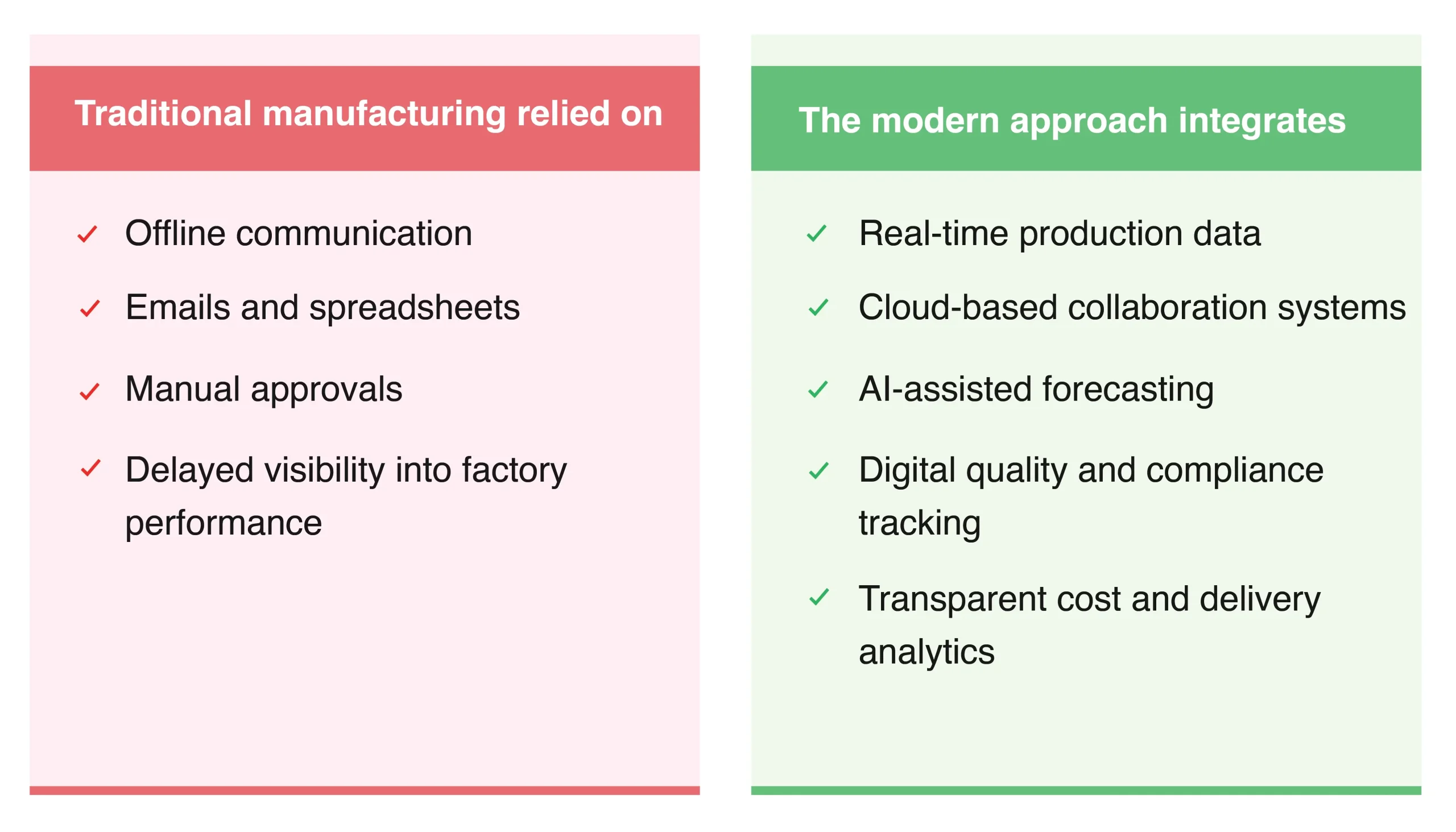
Simply put, digital transformation is all about empowering existing apparel systems by replacing siloed, manual systems with connected digital workflows. On top of this, the workflow goes throughout the whole value chain – design/sampling – production/delivery and reporting for best control and efficiency.

Fashion Manufacturing Model (Comparison)

This shift doesn’t just improve efficiency; it completely changes how fashion is created, produced, and measured.

Change in Consumer Behavior and Digital Shifts in Fashion

First of all, the rise of e-commerce didn’t just take shopping online; it also changed how consumers discover, evaluate, and trust brands. Today, digital channels influence the majority of fashion purchase decisions, according to a report by McKinsey

Meanwhile, digital experiences like virtual fitting, AI-powered product recommendations, and social commerce have also sent shopper expectations skyrocketing. For example, 46% of consumers now say they want brands and companies that will keep them happy by delivering personalized experiences with their loyalty taken into account.

As a result, personalization is now a must. If a shopping experience appears generic, consumers are more inclined to drop out. According to Statista, most shoppers go through social media, reviews, and creator content before deciding on a product purchase.

These shifts clearly showcase how deeply the fashion industry at present relies on digital tools. As a result, for companies looking ahead to 2030, it’s clear that brands that invest in personalisation, transparency, and digital infrastructure will be best placed for success in the long term.

Why 2026-2030 Will Be a Turning Point in Fashion Manufacturing?

The apparel industry is undergoing multiple simultaneous disruptions, and they’re accelerating:

1. Digital Tools Are Becoming Standard, Not Optional

Digital is not a test balloon anymore. AI-enabled design, virtual prototyping, and predictive planning are going from pilot programs to the production floor.

For example, AI design tools can create hundreds of iterations of a garment and give them a digital stamp of approval before they are sewn with a single stitch. This cuts waste, accelerates approvals, and fosters creativity – without skimping on quality.

More and more custom clothing services require a commitment to sustainability and visibility. This flexibility is provided by digital systems that offer traceability from raw material through to the final product.

2. Consumers Want Purpose More Than “Premium”

By 2026, the idea of “premium” will have become much more meaningful. It’s not enough simply to have a brand label; people want to know why you do,  what you do. Rather than just probing what a product is composed of, consumers now care about intent and purpose. They are looking to determine why it was made and how it found its way onto the shelf and into their hands.

And this shift has elevated slow fashion from a niche movement to the mainstream. With the environmental toll of fast fashion – from high carbon emissions to massive textile waste generated by unwanted clothing – growing every day, consumers are now moving towards timeless numbers that can last a lifetime. Because, people are tired of wearing clothes that get tossed out after a few months and instead want garments that last longer, feel better, and convey honest information about where they came from.

At last, sustainability is no longer a “nice-to-have.” It’s a deciding factor for many would-be buyers. The proof is in the numbers, with 70% of consumers now willing to spend more on sustainability than they were previously, and younger generations, especially 73% Gen Z (Source: First Insight & Wharton Report 2024), are even willing to pay more for brands that are genuinely transparent and responsible.

In short, fashion buyers are becoming more thoughtful. They’re not chasing trends as much as they’re choosing values. Therefore, it is clearly visible now, brands that align with this mindset are earning stronger trust and long-term loyalty.

3. Materials Matter More

Organic cotton was at the center of sustainability conversations in 2024. By 2026, the goal has changed to advanced but agricultural by-products, such as mycelium leather or Tencel Lyocell textiles. In fact, the agricultural waste market is reportedly set to grow from $12 million in 2024 to an estimated $336 million by 2033. The rapid development in the market for bio-fabricated materials indicates that material innovation will lead the future of sustainable fashion.

Above all, for fashion brands, this means the future of materials won’t be limited to what’s familiar. It will be shaped by what’s smarter, more regenerative, and built for long-term impact.

4. Advanced AI & Predictive Production

AI has evolved the core fashion market. A new wave of AI-based technology is transforming the way clothes are made and sold. Instead of tracking trends after they happen, now designers and makers employ AI to forecast trendlines and customer preferences. This mitigates inventory risk and bad decisions.

To sum up, from forecasting demand to optimizing cutting paths and scheduling factory sequences, AI is now embedded in operations, not just marketing.

5. Radical Traceability and Transparency

Brand claims are no longer enough for consumers and regulators alike; they want proof.

Blockchain, RFID, and traceability systems can now:

  • Track materials from the source
  • Validate labor and sustainability claims
  • Provide real-time supply chain data to buyers.

This trend isn’t marketing, it’s compliance.

6. Virtual Production & Digital Twins

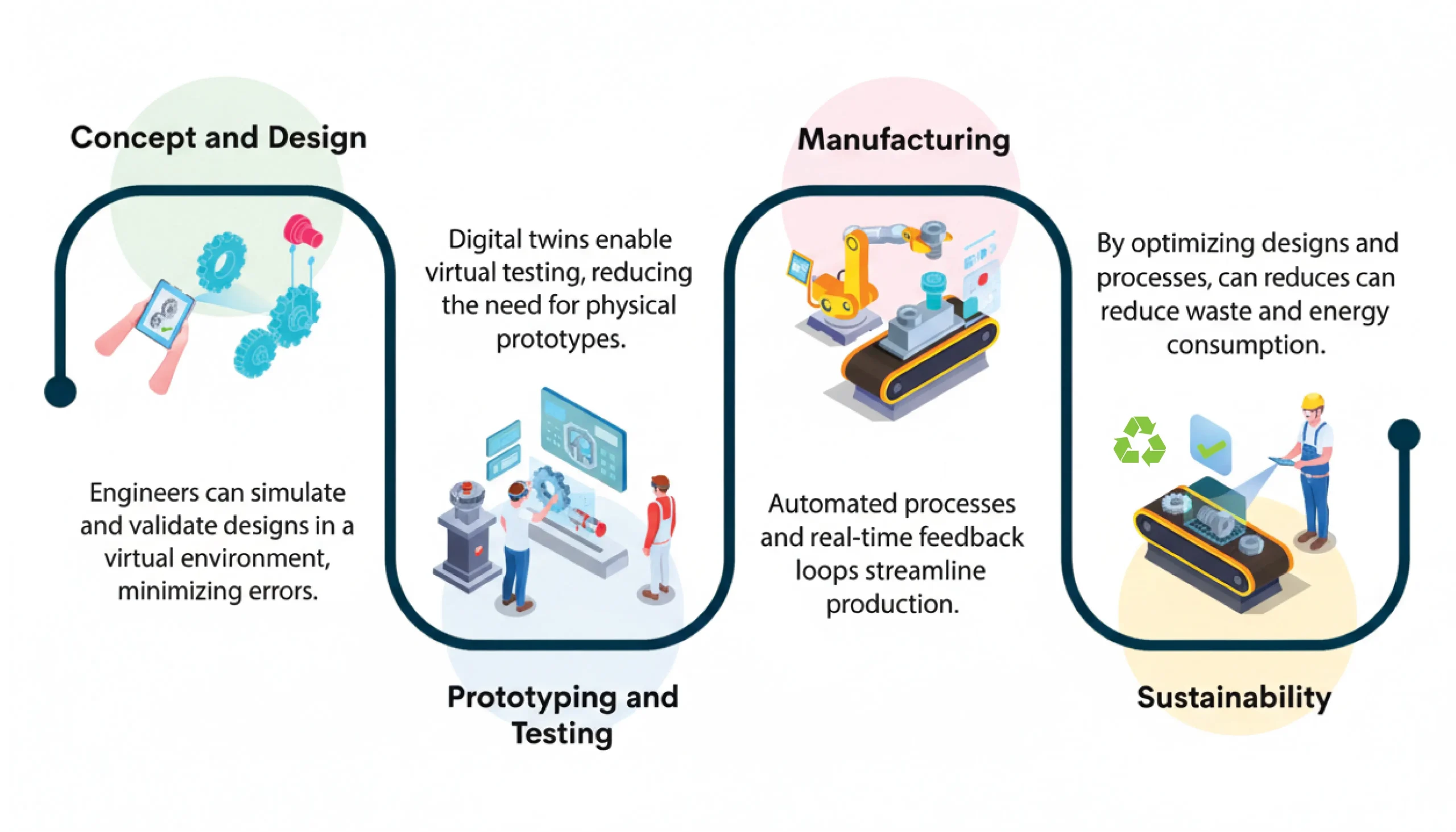
‘Cluster maps’, or ‘Digital twins’, are digital replicas of physical products and processes. In addition, it provides custom apparel designers and developers the means to visualize how garments fit, move, or behave on the production line.

This reduces waste and increases first-time quality, delivering a large advancement over traditional trial-and-error sampling cycles.

7. Fashion on Demand and Customization

People really like things that are one of a kind. So brands are starting to make things when someone orders them. This means that manufacturers are only making what people need. They are also making each thing special for the person who ordered it. On-demand manufacturing is a way of doing things. It does not waste anything. That’s why many brands are focusing on-demand manufacturing to gain access to a modern audience.

This trend is even more pronounced in the nearshoring, modular factories and microfactories that bring local production models with extremely low lead times and reduced carbon footprint.

8. Sustainability, reducing product wastage, and faster Product Development

Between 2026 and 2030, sustainability in fashion manufacturing will be less about how products are marketed than about how they are made. Among the most significant shifts is the reliance on 3-D modeling and digital prototyping early in the design process.

Rather than creating several physical samples, teams now use 3D prototypes to assess fit, construction, and fabric behavior before any cutting. This minimizes product material waste, speeds approvals, fasters product management, and prevents costly last-minute revisions. The less work that needs to be redone, the less fabric wasted and the fewer resources squandered.

At the same time, higher demand is forcing brands to act faster. Digital product development tools also enable collections to be finalized earlier, allowing manufacturers to identify trends and respond without overproducing. Faster development isn’t about taking shortcuts – though those certainly play a role in the old way of working – it’s about employing data, 3D workflows, and more thoughtful planning to make only what the market is ready for.

The faster a brand can get there while advancing and maintaining its integrity, the more likely it is to succeed sustainably and meet consumers’ emerging demands.

WFX: The Digital Bridge Between Brands and Modern Manufacturing

WFX: The Digital Bridge Between Brands and Modern Manufacturing

So what role does a platform like World Fashion Exchange play in this revolution?

WFX isn’t just a marketplace; It is a digital platform that enables brands and manufacturers with:

  • Integrated production tracking
  • Matching of brands and suppliers is based on AI
  • Data-driven pricing and lead-time transparency
  • Digital compliance ESG/Reporting tools
  • Collaborative dashboards across sourcing partners

In an economy powered by data just as much as dollars, WFX looks to be the central account ledger for the modern fashion production facility. As a leading fashion manufacturing, PLM and Apparel ERP Software solution, WFX wants to foster trust and ensure visibility where it matters most, so that the fashion industry can stay ahead with future market requirements.

Key Takeaways

Consumer-led trends that will continue to change the industry by the end of the decade:

  • AI and Data-driven personalized shopping features
  • More social and creator-led commerce
  • Growing reliance on reviews and peer validation
  • Increased focus on transparency and sustainably
  • Forced buying decisions with real-time content

These changes have made one point crystal clear: digital systems are not tools that support, but part of the brands’ output themselves.

Final Thoughts: The Quiet Revolution That Changes Everything

The next era of fashion will not be defined by one technological moment. The change will happen slowly. Technology will be around us and will quietly change things. 

By the year 2030, brands that use workflows and are transparent and make decisions based on data will be the ones in charge. Simply put, digital workflows and data will be very important for brands to succeed.

The future of fashion is data first, and platforms like World Fashion Exchange are helping the industry make that future both reliable and reachable.

FAQs:

What will the fashion industry look like by 2030?
By 2030, fashion will be data-driven, digital-first, and sustainable. Crowdsourcing, AI-driven demand forecasting, on-demand manufacturing, digital traceability, and local manufacturing will help prevent mass overproduction. In response to these regulations, and to satisfy consumer demand, brands will advocate for transparency, personalization, and circular design.

Is digital clothing the future of fashion?
A growing part of fashion in the future will be developed digitally, especially in virtual environments, gaming, social media, and digital marketing. Although physical wearables aren’t going anywhere, digital fashion will be instrumental in virtual try-ons, design testing, NFTs, and minimizing physical sampling waste.

What is digital in garment manufacturing and why does it matter?
For digital apparel manufacturing, interconnected systems, 3D design, cloud-based collaboration, AI planning, and traceability tools track the life cycle of production. It matters because it increases speed, transparency, cost, and care controls; what’s more, it is also making fashion chains work at their best.

Why is traceability being made compulsory for fashion manufacturing?
The demand for traceability is increasing due to more stringent legislation, reporting requirements, and consumer desire for transparency. Digital traceability systems, which enable brands to monitor materials and labor practices as well as the stages of production, in turn support compliance and consumer trust.

How does on-demand fashion production minimize waste?
On-demand manufacturing means clothes are made only once there is an order. This eliminates overstock and decreases textile waste, cuts down on storage costs, and can better match production to what consumers want, making it one of the most sustainable production models in fashion.

What should fashion brands brace themselves for by 2030?
As we head to 2030, fashion brands need to get ready for AI-powered planning, mandatory sustainability reporting, digital traceability standards, localized production models, and fully connected cloud-based manufacturing workflows. Early adopters are likely to benefit from the first-mover advantage.

Read Our Blogs

...
How AI Is Helping the Fashion Industry Reduce Fabric Waste

Discover how AI helps fashion brands reduce fabric waste through design and precision cutting.

Read More
...
How AI-Fueled Decision Intelligence Is Reshaping the Fashion and Apparel Industry

Discover how AI decision intelligence reduces fabric waste, improves planning, and enhances fashion production.

Read More
...
How WFX AI Techpack Gives Apparel Manufacturers a Smarter & Faster Edge

WFX AI Techpack automates apparel data, reducing errors and speeding up production efficiency.

Read More