
















Every year, around 92 million tons of textile material – from production scraps to unsold garments – is left unused in the fashion industry.
This isn’t just waste.
It clearly shows how disconnected and reactive operations have become.
With an ever-evolving market, pressure builds fast now – to move quicker, guess right, hit targets every time. Staying ahead means trimming excess, guarding profits, and staying close to shifts in taste.
Slow trials are gone; AI has shifted from test phase to necessity in the fashion industry. What drives it? Speed that matches real life, precision that leaves little error, designs that stand out without shouting.
Fashion stores turn to smart systems simply because waiting costs too much. The impact? Nearly 75% of fashion leaders are already planning to prioritize AI in the coming years.
The shift is clear:
Fashion is moving from intuition-led operations to intelligence-driven execution.
Fashion Product Lifecycle Management (PLM) platforms have revolutionized this aspect of the industry. PLM systems enable organizations to keep all their product data in one place and connect design teams with development, sourcing, and production teams.
The next evolution is now taking place: AI in Fashion PLM.
AI helps overhaul the way fashion businesses handle data. Instead, the transfer of product data can be analyzed, interpreted, and leveraged to generate actionable insights.
In this article, we explore:
- Genuine Fashion PLM applications for brands
- Proven benefits of AI in fashion retail
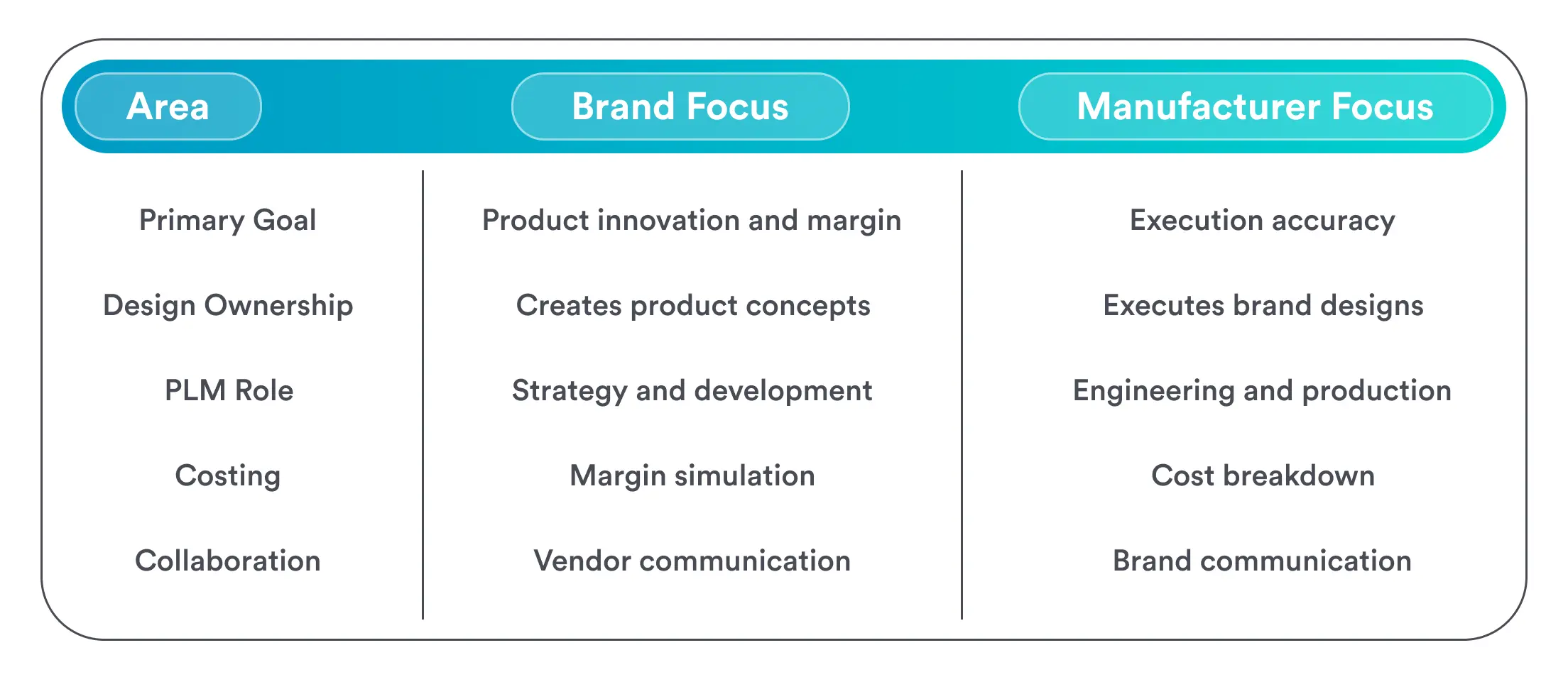
- Practical PLM applications for manufacturers
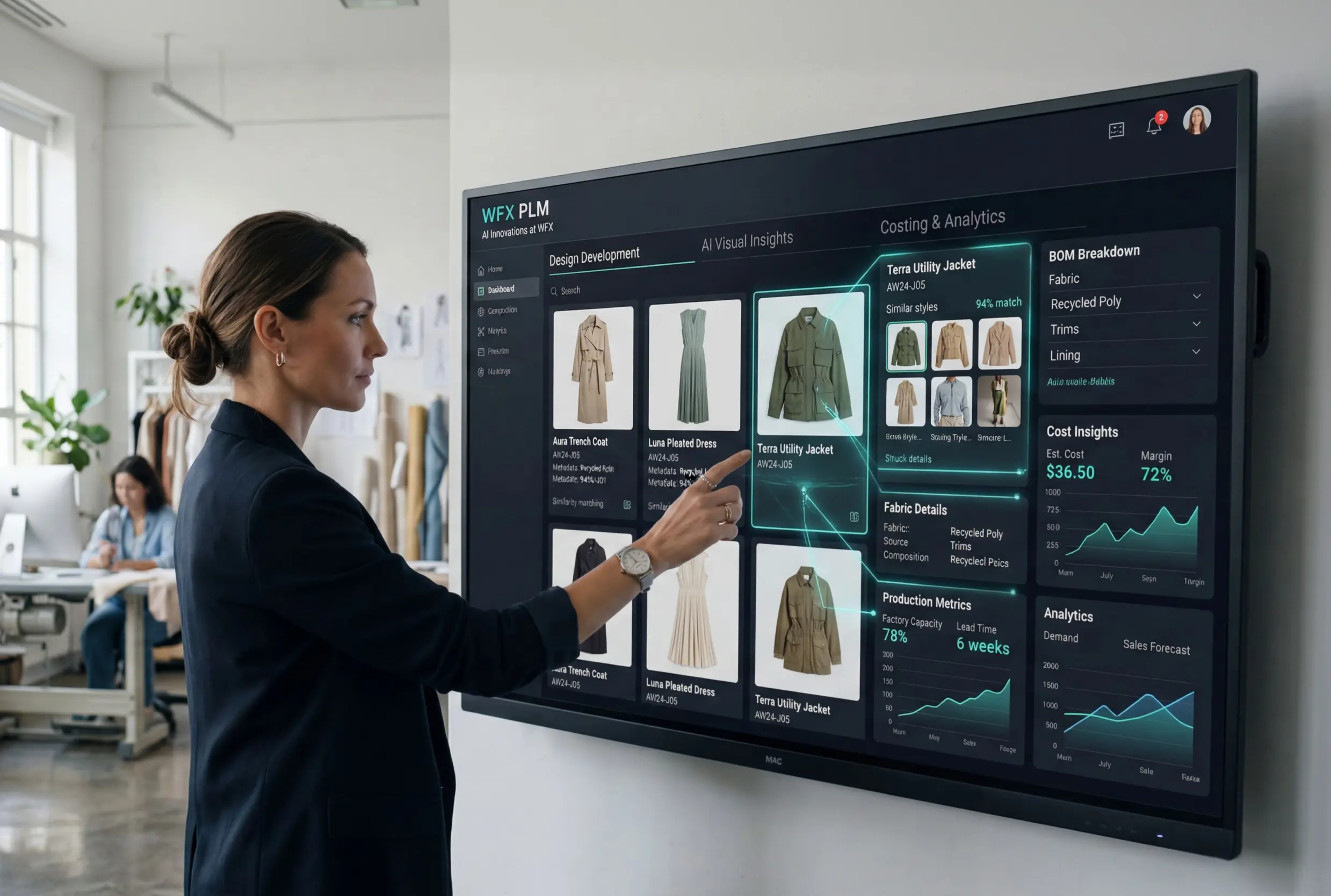
How AI-powered PLM platforms, such as WFX AI, empower fashion product development and overall operation cycle